Sequence of four images showing a family preparing for a trip. The first image shows a woman lying on the floor, comforting a baby lying on a changing pad. The second image shows a girl sitting on a couch, dressed and ready with a backpack and a stroller. The third image shows a man loading a baby into a car's trunk. The fourth image shows the man outdoors holding a baby with a diaper bag hanging from his shoulder.

Chikiroo Wearable Changing Station

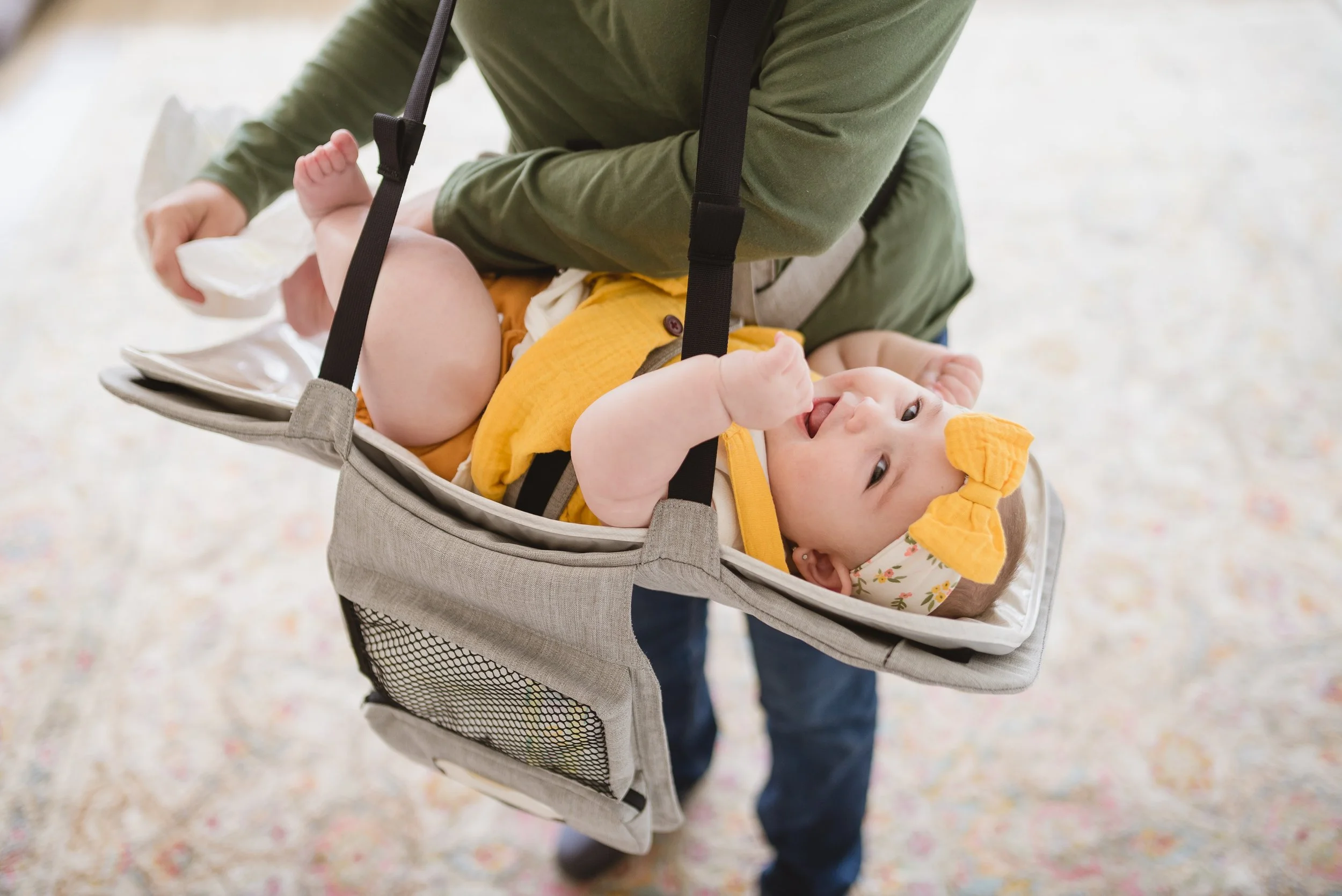
Chikiroo is the world's first patented wearable baby changing station, designed to make diaper changes safer, cleaner, and more convenient for parents and caregivers while standing, sitting, or on any flat surface.

I led the end-to-end creation of a new product category—from ideation and concept validation to designing, manufacturing, branding, launching an award-winning product, growing, and ultimately winding down the business in 2026.

This case study chronicles an eight-year product journey.

ROLE
Founder & Lead Product Designer

DURATION
8 years (2018 - 2026)

PATENT
U.S. Utility Patent No. US 11,540,616 B2

SCOPE
End-to-End product development

RESPONSIBILITIES
User research, design, manufacturing, branding, e-commerce, and marketing.
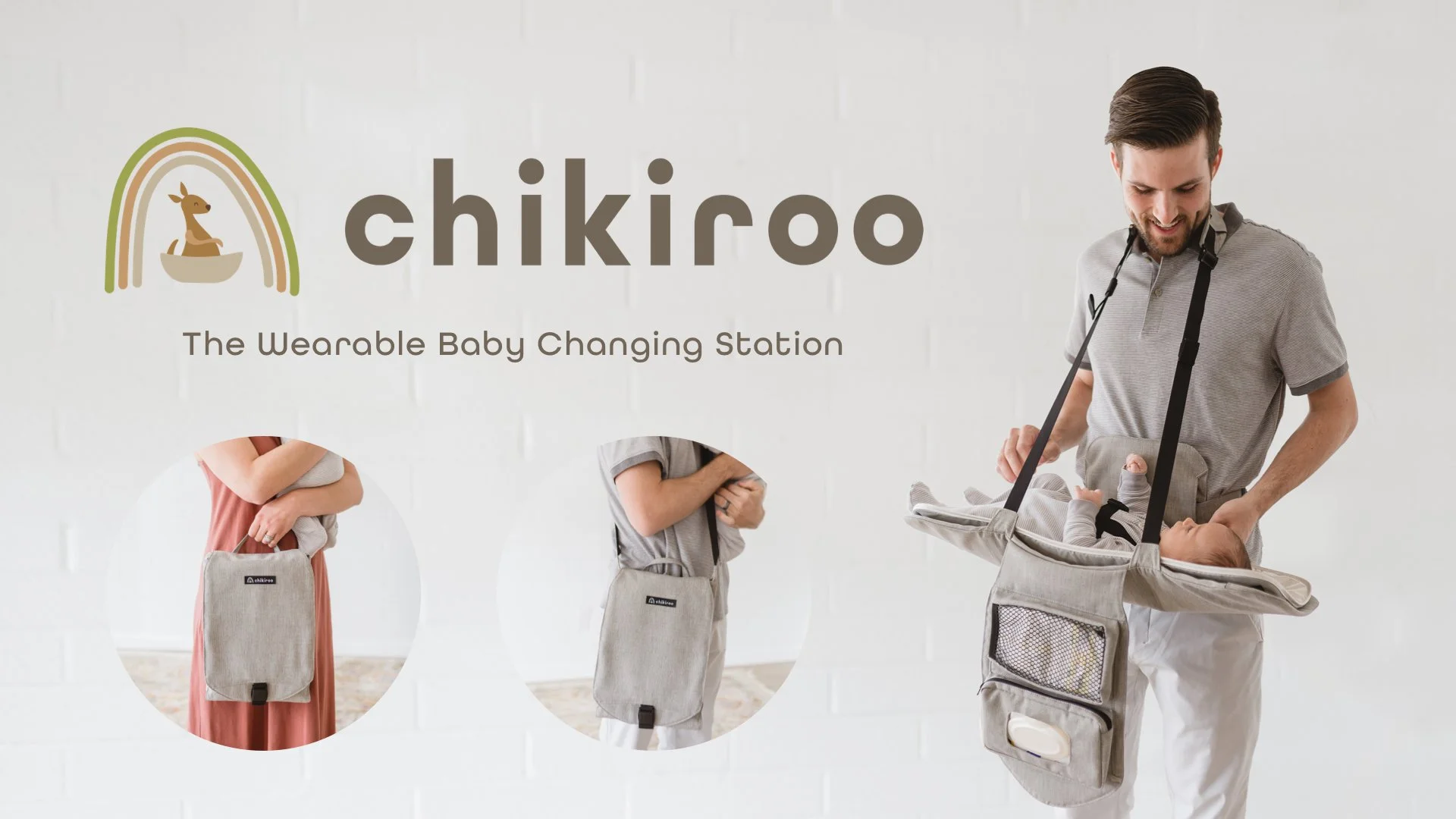
A man smiling while looking down, wearing a gray shirt, holding a baby in a harness carrier. The background features the logo and name "chikiroo" with the tagline "The Wearable Baby Changing Station." There are also images showing different views of a portable baby changing bag.
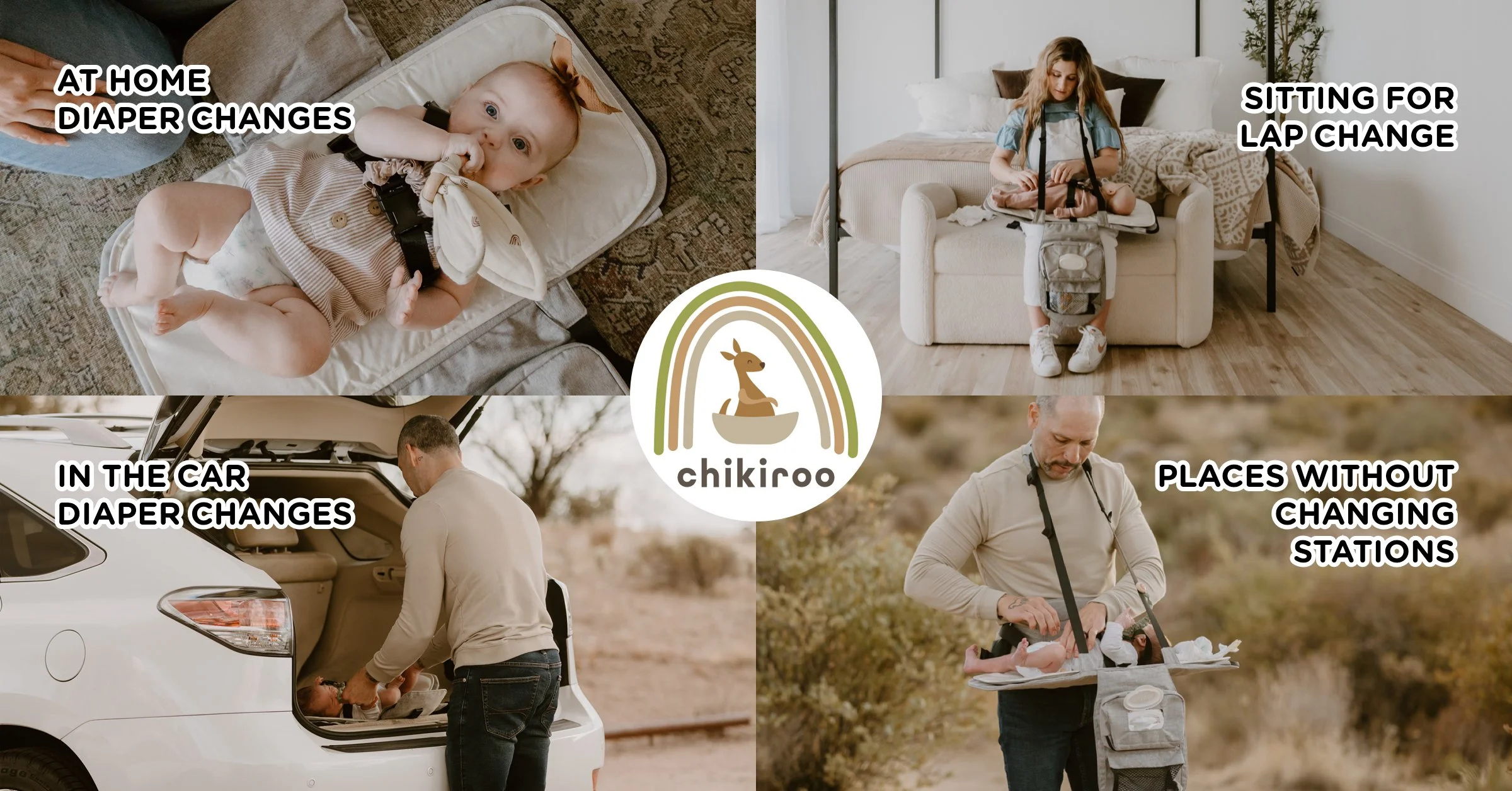
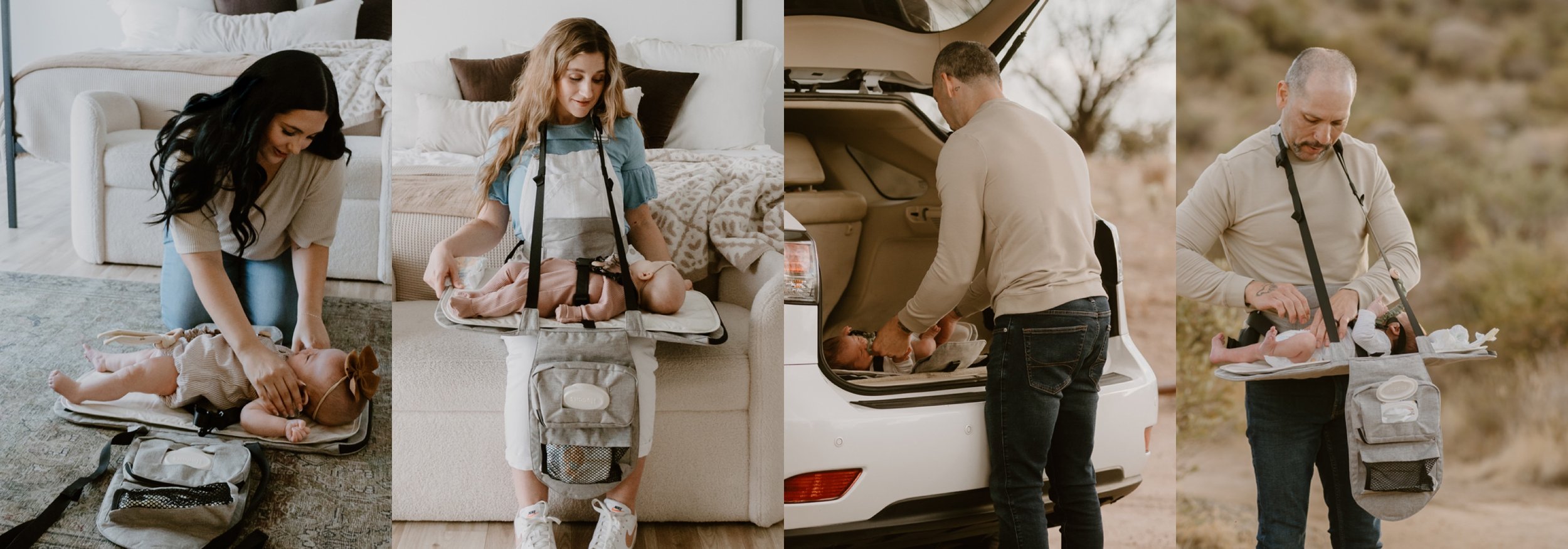
Collage of four photos showing diaper changing situations: a baby on a changing pad at home, a girl sitting for a lap change, a man changing a baby in the car trunk, and a man changing a baby outdoors, with the Chikiroo logo at the center.

The Opportunity

Like many parents, I encountered an unexpected challenge during what should have been a routine family outing. While out to dinner with my then-husband, our toddler, and our six-month-old daughter, I needed to change my baby's diaper but discovered there were no changing tables in either restroom. With no clean or safe alternative, I found myself attempting a one-handed diaper change while balancing my baby over my shoulder, unwilling to place her on a dirty restroom floor, wet sink counter, or in a hot car.

That frustrating experience stayed with me long after we got home. While taking a shower later that evening, the idea suddenly clicked: What if there was a better way to change diapers anywhere? I immediately began sketching concepts for a wearable baby changing station, marking the beginning of what would eventually become Chikiroo.

Siska Hines Chikiroo

Market Research (2018)

To validate whether the challenge I experienced represented a broader market opportunity, I conducted a survey with 133 parents and caregivers across the United States to better understand public diaper-changing habits, frustrations, and priorities.
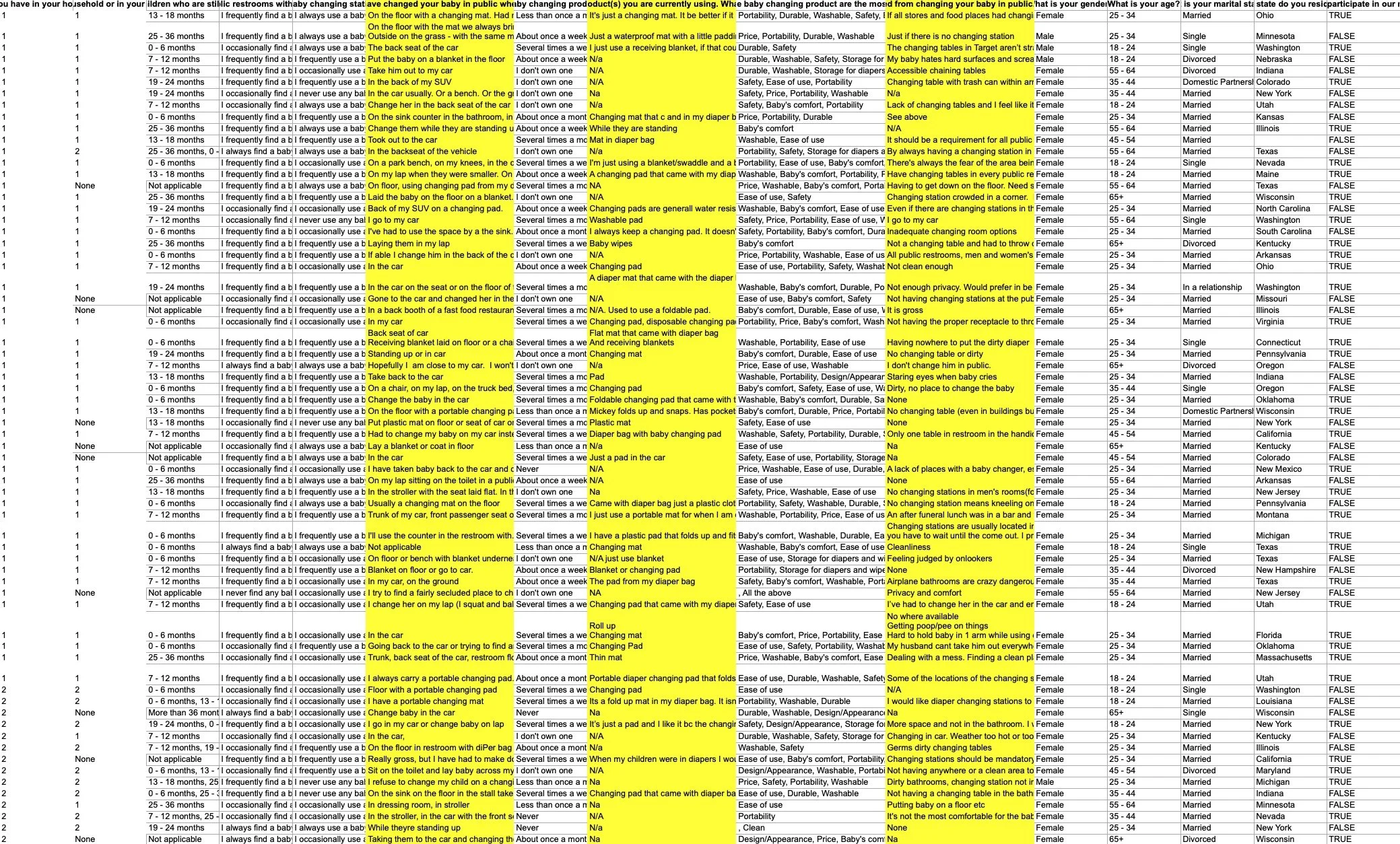
A detailed spreadsheet with information about car safety and baby care in vehicles, highlighted in yellow, including issues like changing mats, diaper pads, and car seat positioning.

Key Findings

Parents frequently improvised diaper changes
Using cars, restroom floors, laps, or strollers whenever changing tables weren't available.

Cleanliness and accessibility were the biggest pain points
Parents cited dirty or poorly maintained changing stations, lack of privacy, and the absence of changing tables in many men's restrooms as recurring frustrations.

Function mattered more than aesthetics
Washability, ease of use, safety, portability, and baby comfort consistently ranked as the most important product attributes.

Existing solutions fell short
Portable changing mats helped keep babies off dirty surfaces but lacked versatility, were difficult to clean, and didn't fully address parents' real-world needs.

The research confirmed an unmet need

within an overlooked product category, revealing an opportunity to create a meaningful new solution.
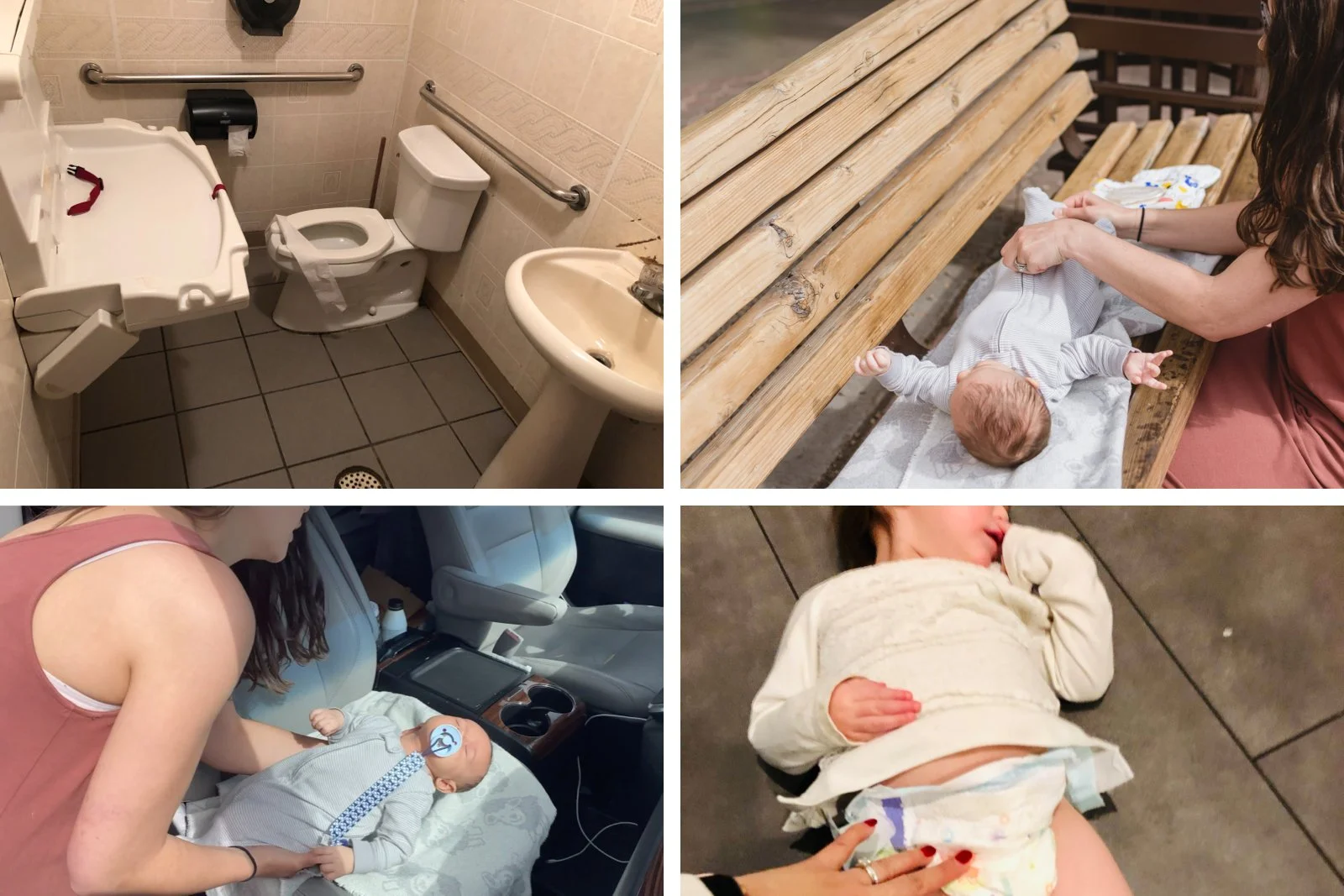
A collage of four images: a hospital bathroom with a portable toilet, a woman with long hair adjusting a baby lying on a wooden bench, a woman in a pink tank top holding a baby with a pacifier in a car, and a woman lying on the ground with a baby in a diaper.

Opportunity Identified

The research confirmed that the problem extended far beyond my own experience and revealed an opportunity to rethink the diaper-changing experience. Rather than designing another changing mat, I focused on creating a portable solution that prioritized hygiene, ease of use, and flexibility—whether or not a public changing table was available.

*Personas and competitive analysis are not included in this research part of the case study.

Ideation

Design inspiration came from looking beyond traditional baby products.
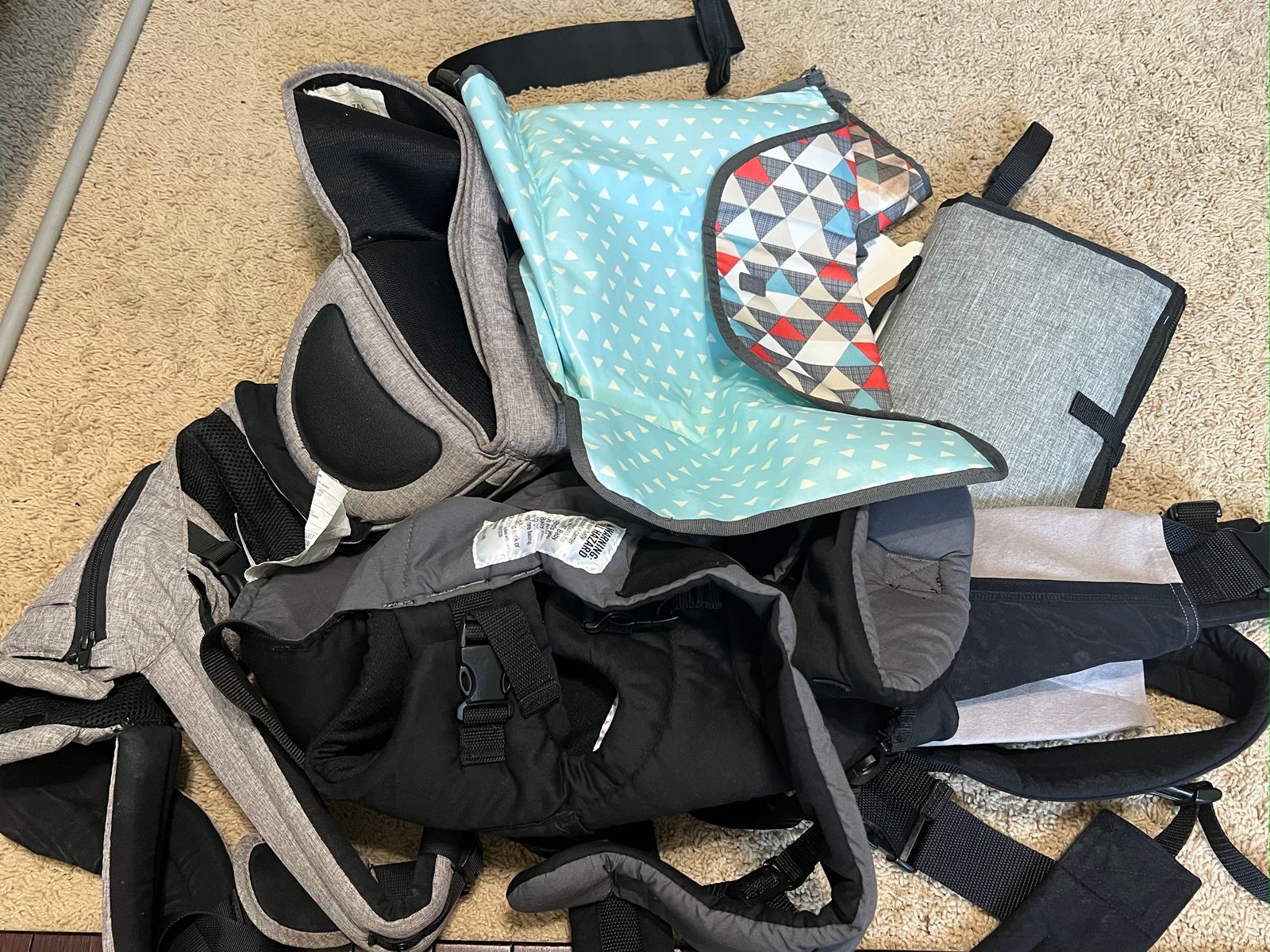
A collection of used backpacks and a diaper bag spread out on a beige carpeted floor.
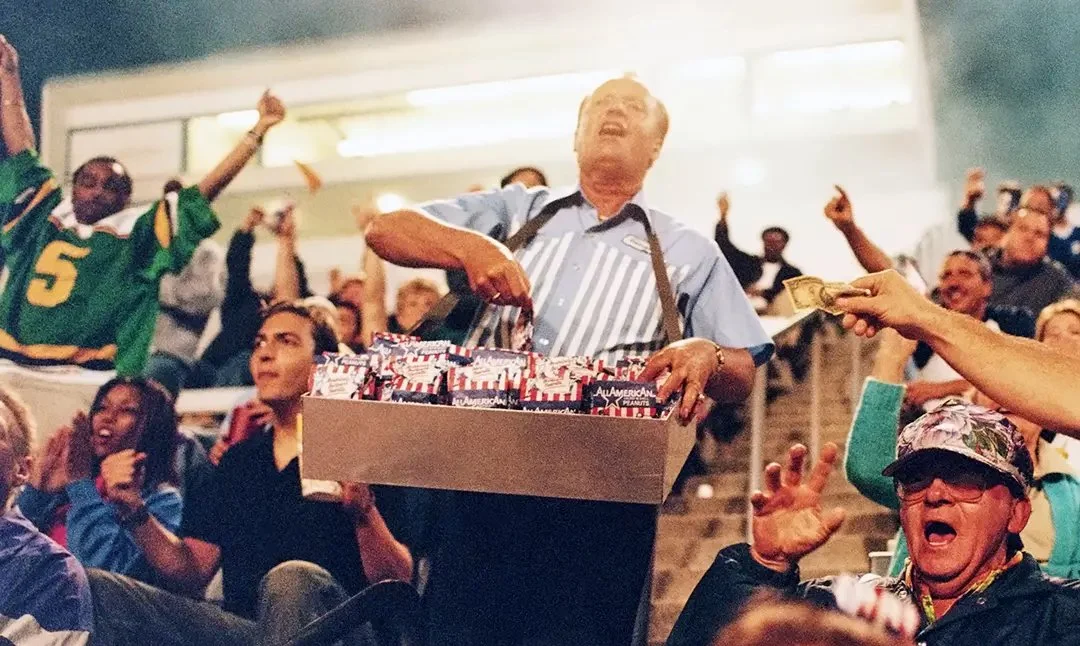
A crowd at a sports event, with people cheering and one man holding a tray of snacks or treats, while another person hands him cash for payment.
A man with a beard and glasses wearing an orange shirt and a baseball cap, standing among a crowd at an outdoor event, holding a blue box and smiling at the camera.
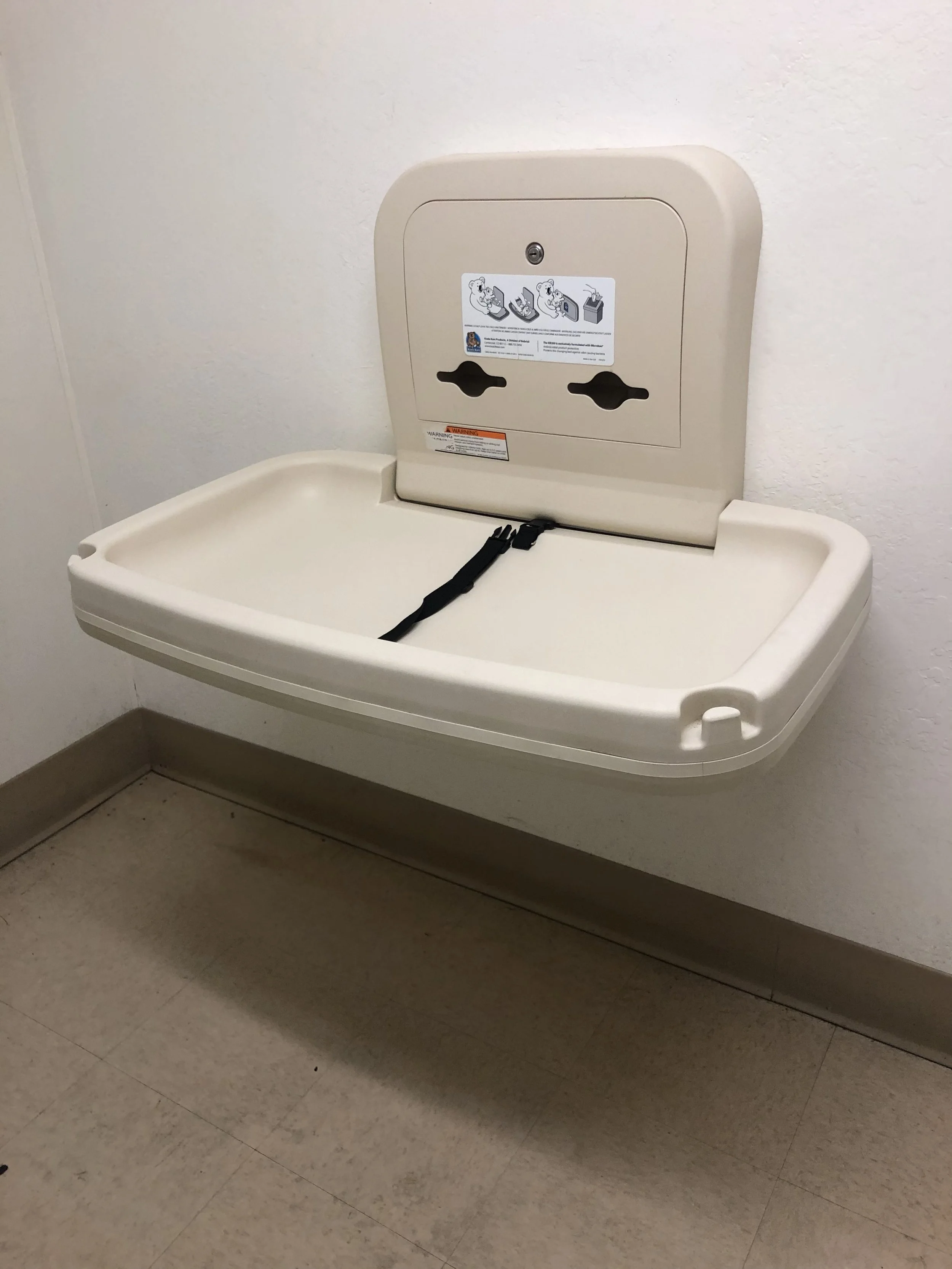
A beige plastic changing station mounted on a white wall in a public restroom.
Kangaroo with joey in a grassy landscape with distant ocean or lake and hills in the background.

Fun Fact

The name Chikiroo was inspired by a cheeky joey (baby kangaroo)!

Rather than limiting my research to existing diaper-changing solutions, I explored how people and nature solve carrying and accessibility challenges.

Early Concept Exploration

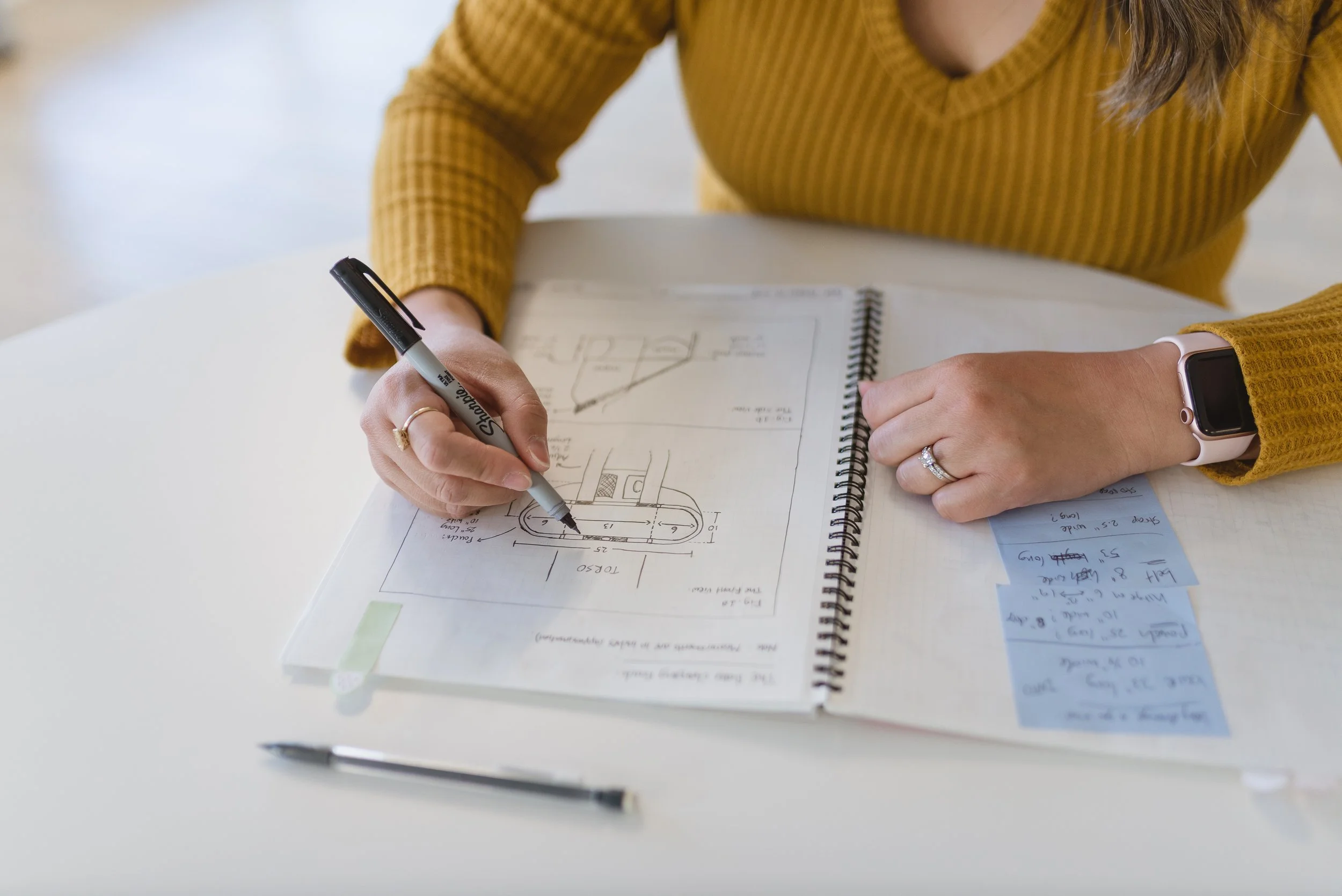
From these early ideas, I sketched multiple concepts exploring how a wearable changing station could balance comfort, safety, portability, and ease of use.
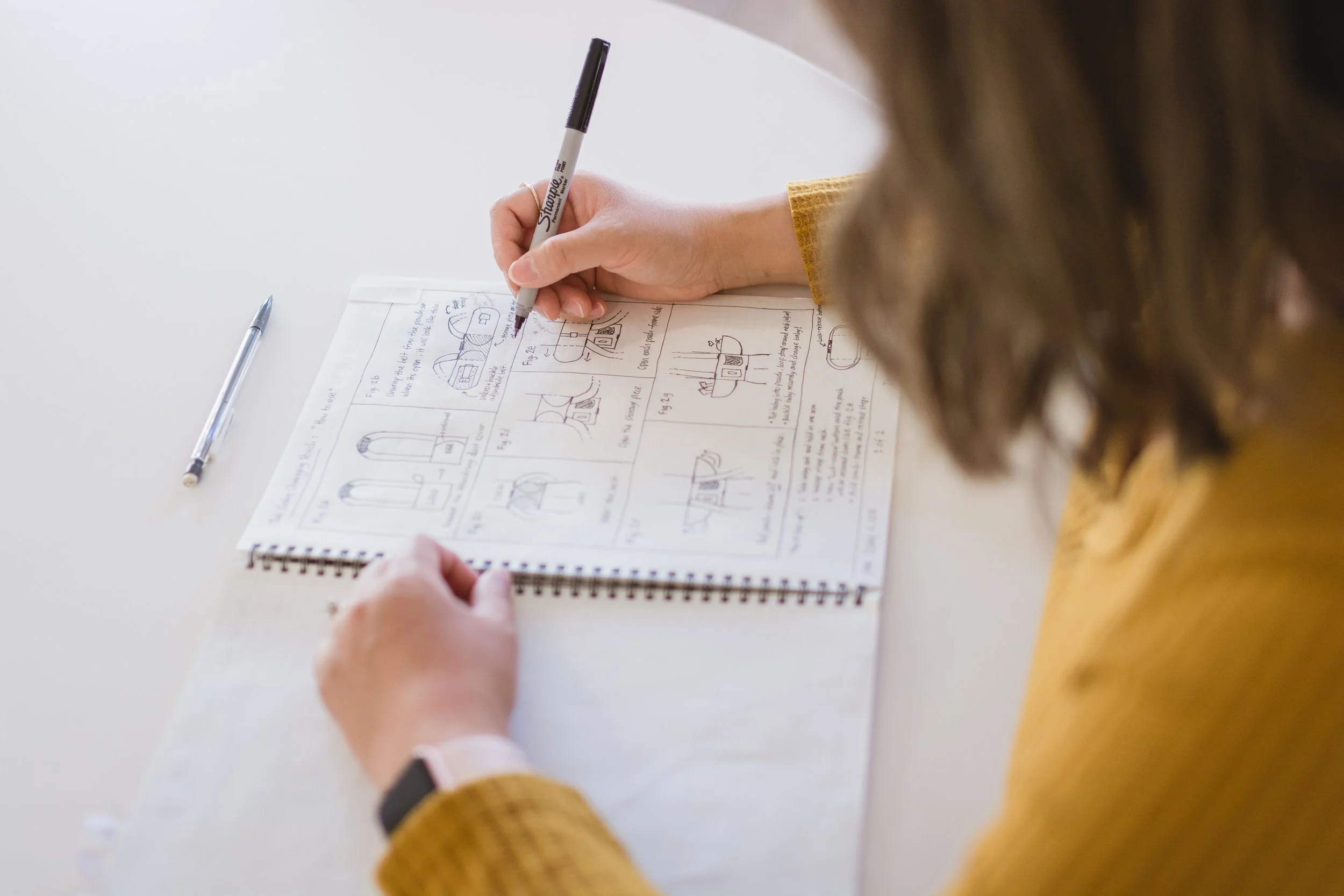
A person writing on a notebook with hand-drawn diagrams and notes, with a pen placed on the white table and another person's hand holding the notebook.
A person wearing a mustard yellow sweater is writing with a black marker on architectural plans in a spiral notebook, placed on a white desk.

Prototype Development

Turning a new product idea into a safe, production-ready consumer product required years of iteration.
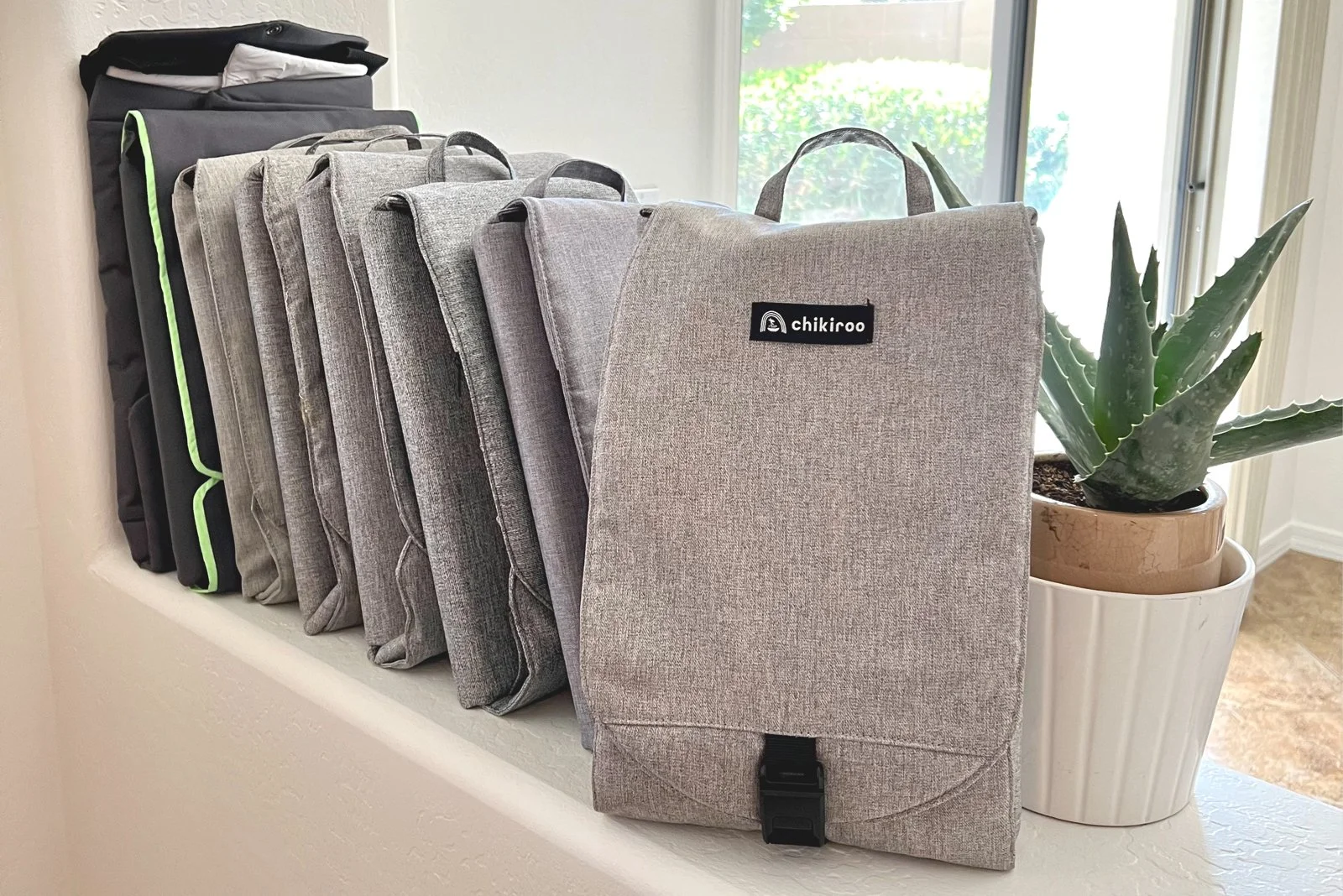
A row of gray and black fabric bags with handles, labeled 'chikiroo,' placed on a white ledge near a window, with a large potted succulent plant nearby.

Iteration Over the Years

Working alongside experts in soft goods design, juvenile product safety, patent law, and manufacturing, I refined the concept through multiple prototypes to improve comfort, usability, durability, and manufacturability.

Each prototype uncovered new opportunities to simplify the design, enhance the user experience, and prepare the product for manufacturing. Throughout the journey, my youngest daughter, Adie, became my very first product tester, affectionately known as the first "Chikiroo baby", allowing me to evaluate the design in real-world parenting scenarios as she grew.

Below is a snapshot of Chikiroo's evolution from early concepts to close to production-ready sample.

Year 2018

The first cardboard mockup used to explore the initial folding mechanism of the changing platform.
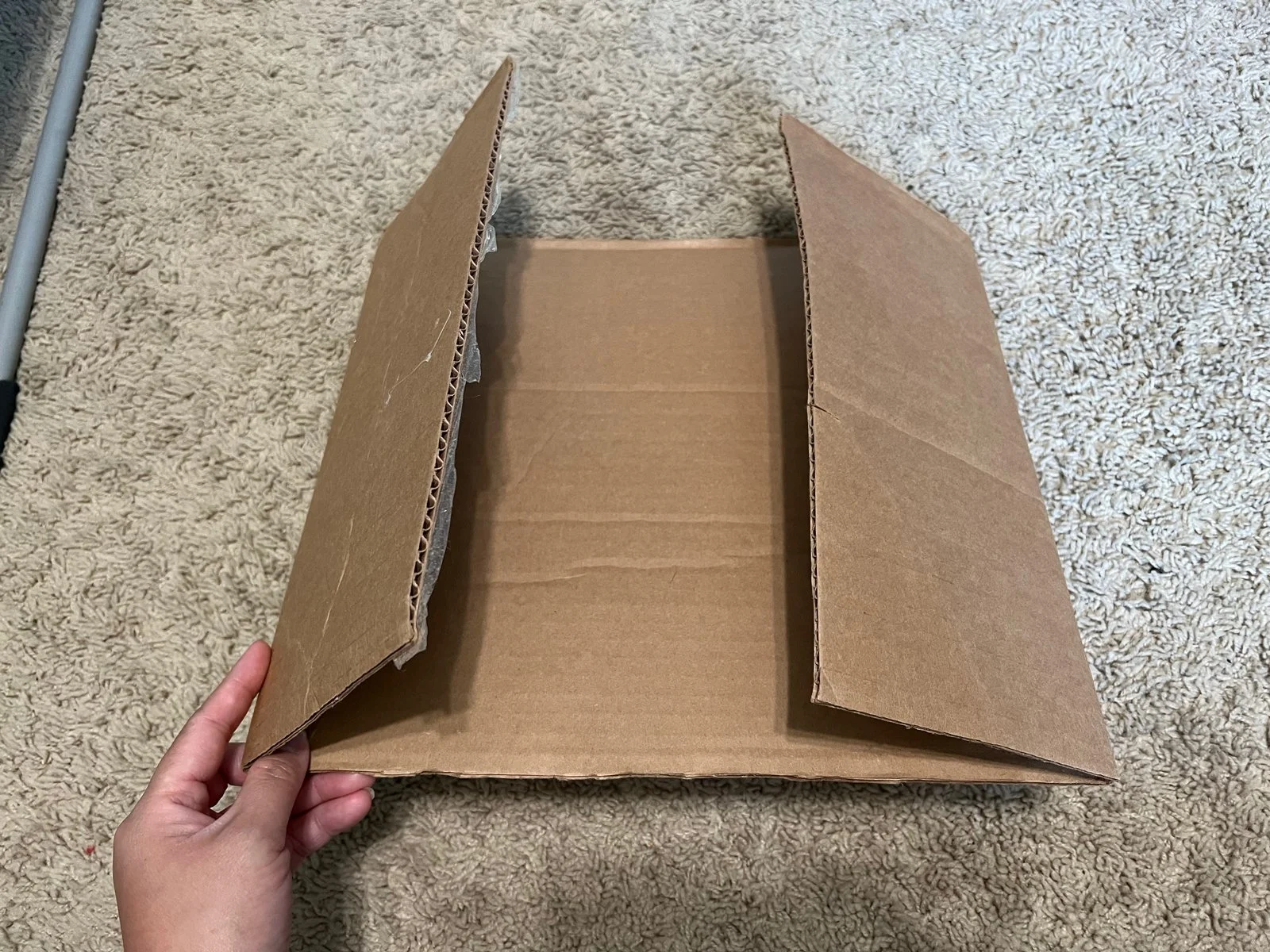
Open empty cardboard shipping box being held by a person's hand on a beige carpeted floor.

Year 2019

Prototype #1 was a rough, hand-sewn mockup used to test the core concept of a wearable baby changing station.
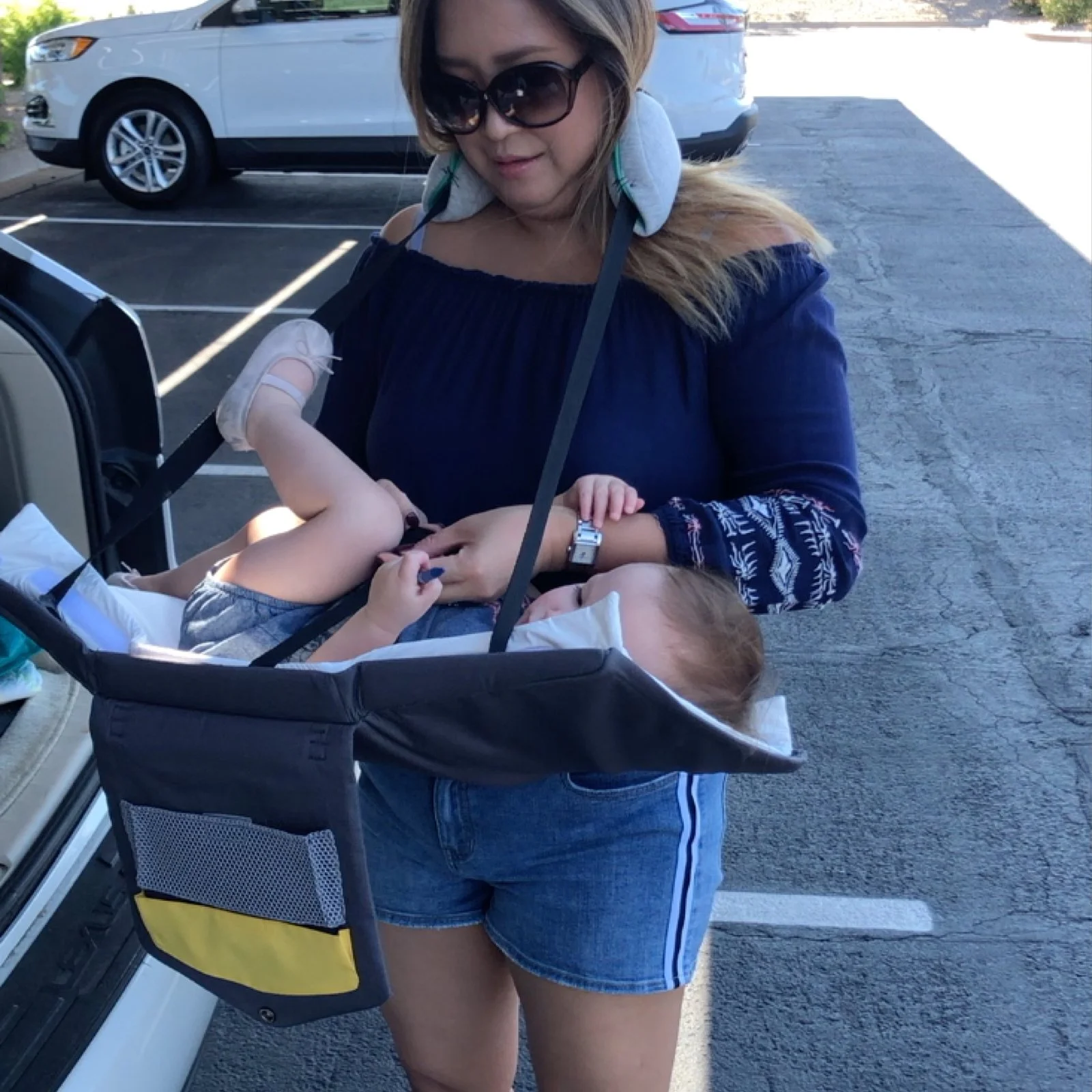
A woman wearing sunglasses and a black off-the-shoulder top is standing outside a parking lot, looking down at a young child lying in a wearable changing station. The woman is holding the child's hand.

Year 2019 (Cont.)

Baby Adie quickly became our very first "Chikiroo baby." She always looked forward to diaper changes in the prototype, making her our earliest, and most enthusiastic product tester!
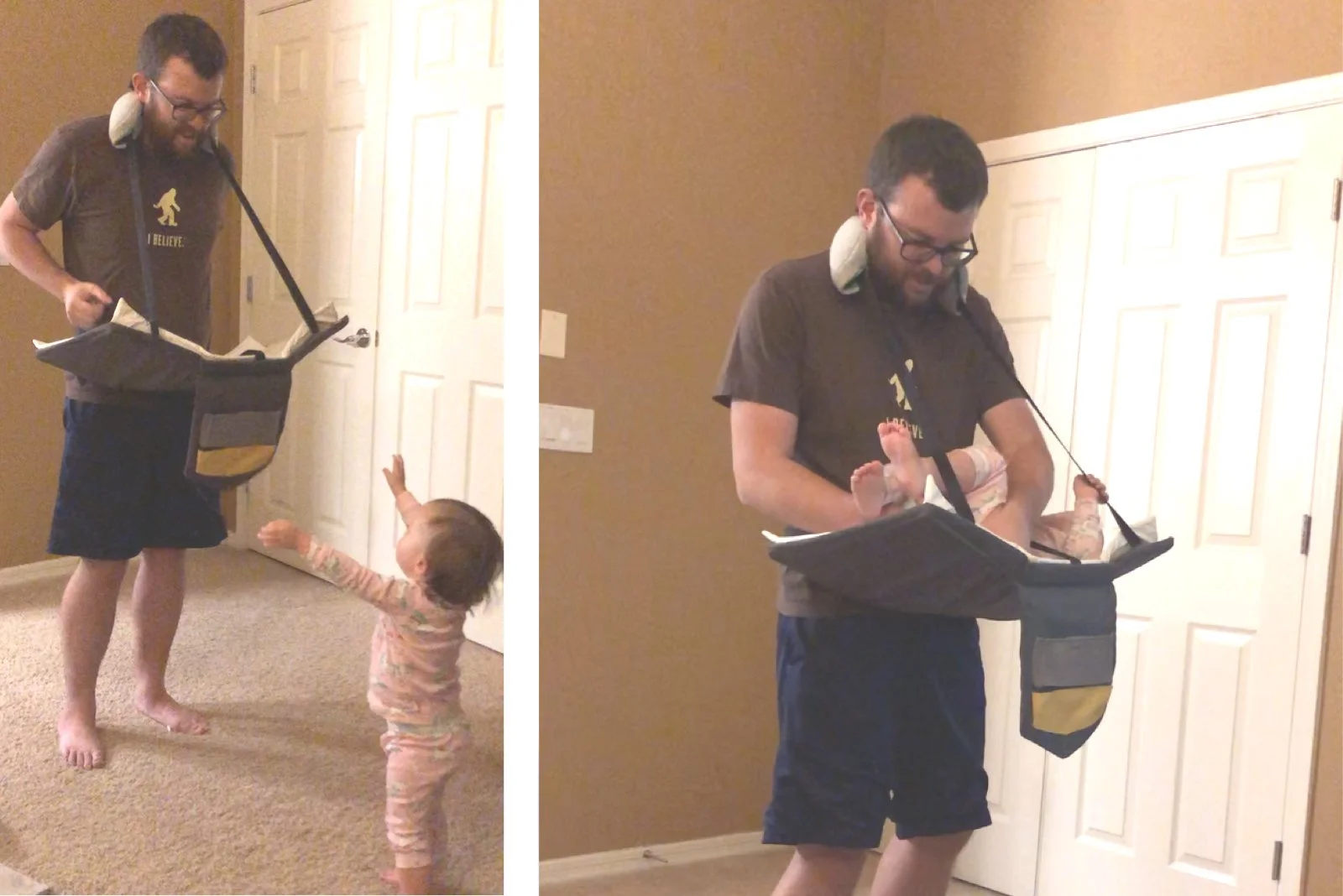
A man with glasses and a beard is carrying a baby in a hanging infant sling, while a young girl reaching upward interacts with him. They are indoors in a room with beige walls and a closed white door.

Year 2020

Prototype #2 represented a significant step forward, but it still fell short of the production-ready sample quality and user experience I envisioned. This became a turning point in the project, leading me to seek a new design partner with expertise in soft goods.
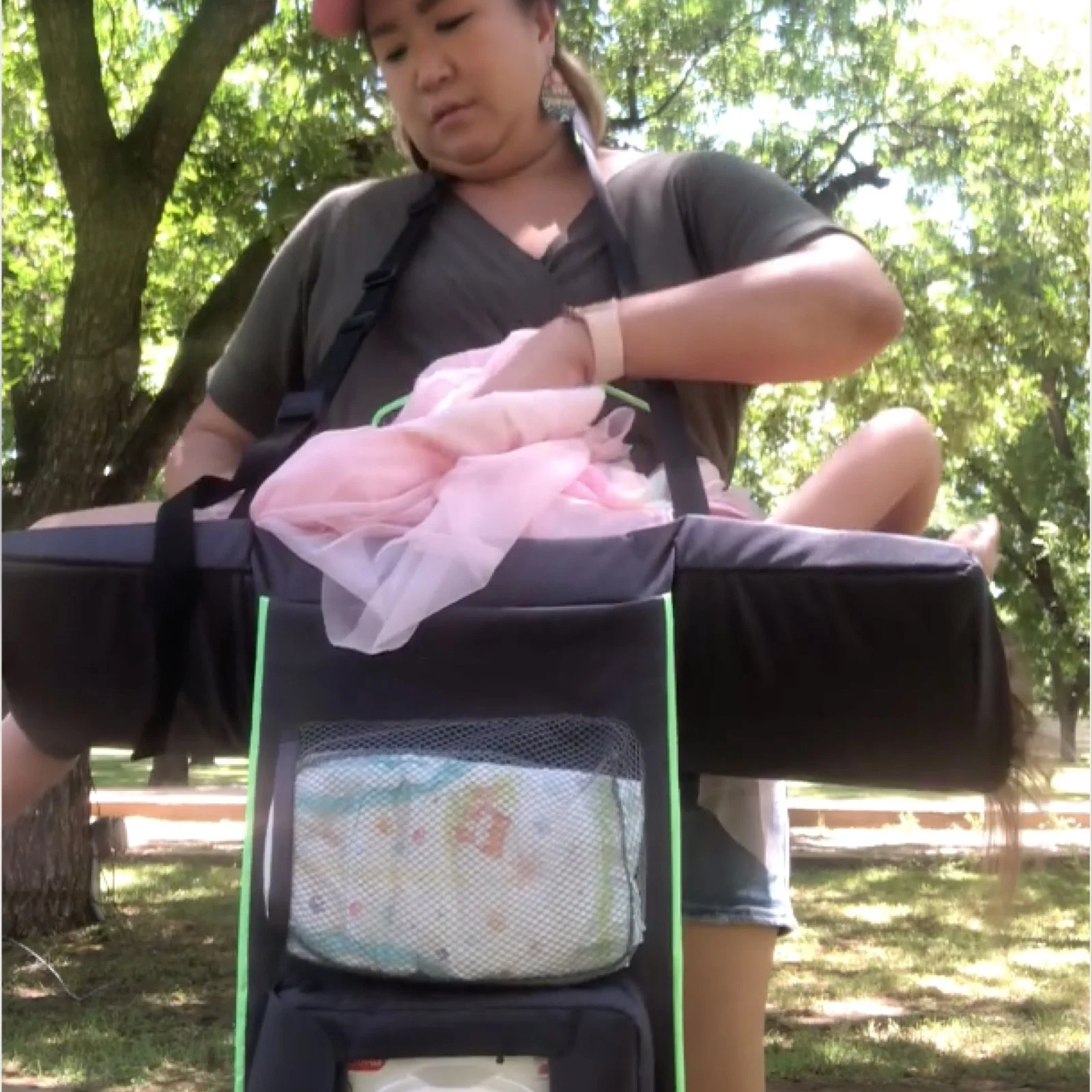
A woman outdoors under a tree, looking down at her watch or bracelet. The scene is shaded with sunlight filtering through the leaves.

Year 2021

Later that year, I pivoted and partnered with a soft goods designer. Our collaboration resulted in Prototype #3, the closest yet to a production-ready sample. It became the prototype used for further market validation and product testing.

By then, our first "Chikiroo baby" was getting so big!
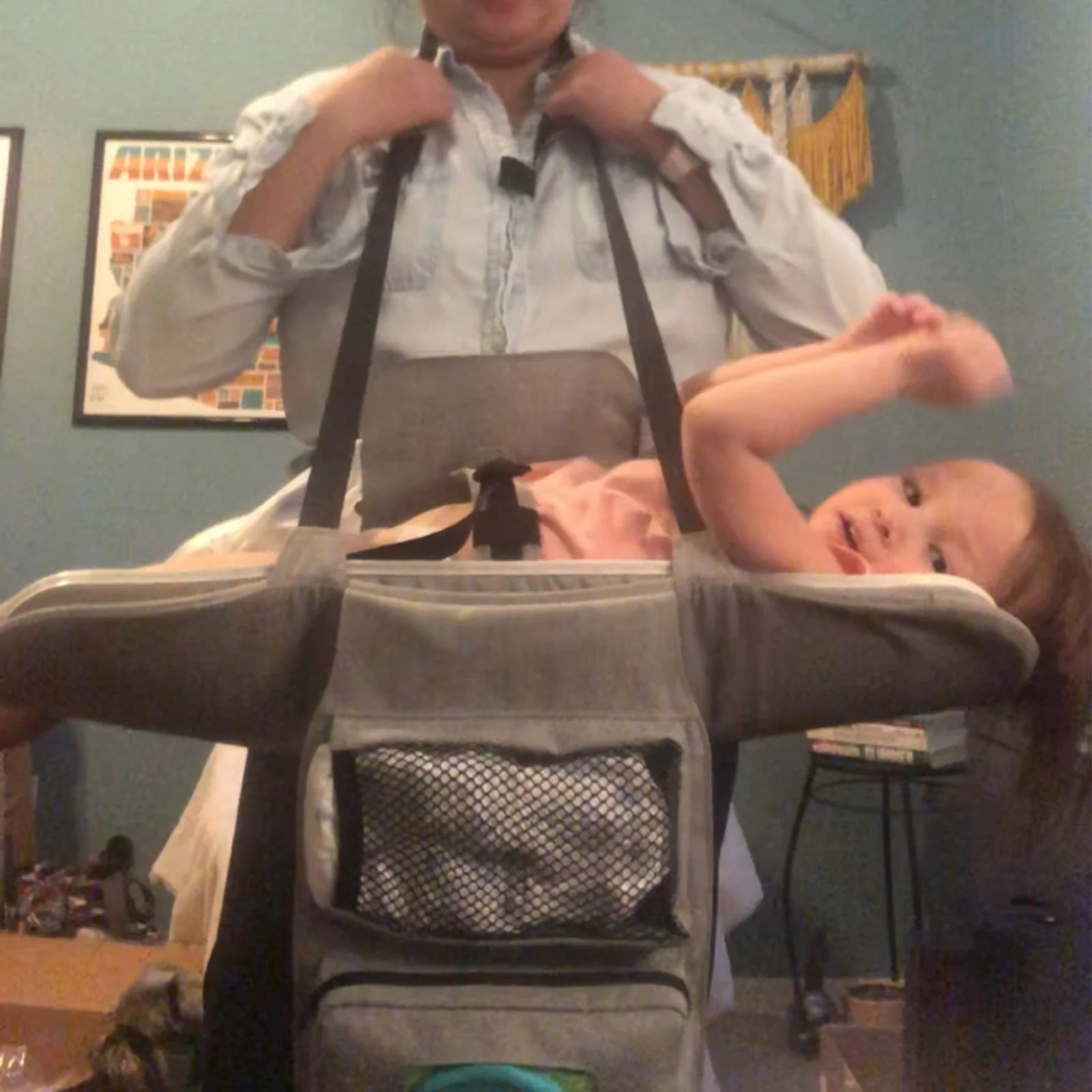
A person standing behind a dog in a stroller, with a young girl lying inside the stroller, indoors with a blue wall, framed art, and furniture in the background.

Focus Group & Product Testing (2021)

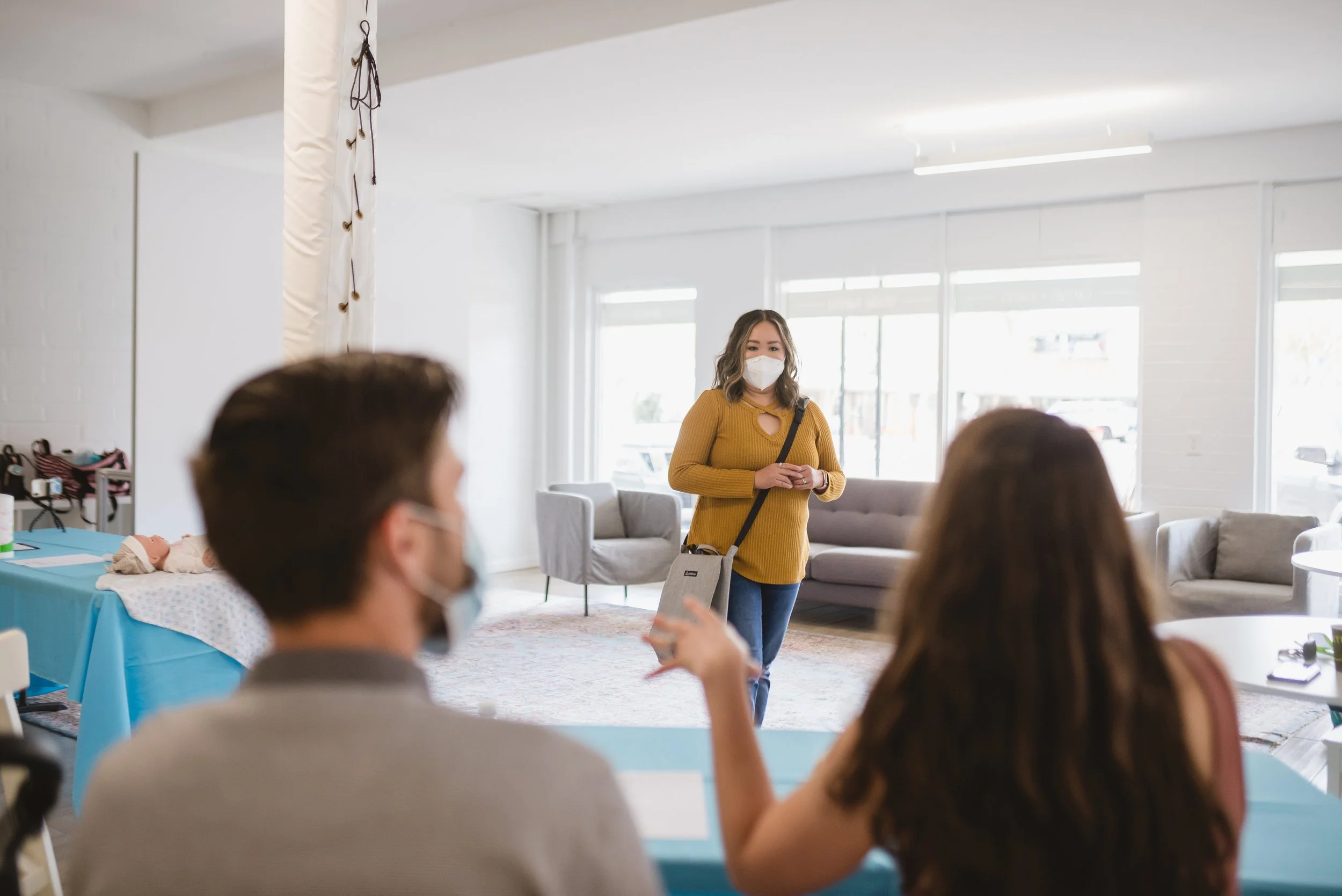
To evaluate the first working prototype, I facilitated a focus group with seven parents of infants under 12 months old weighing between 8 lbs to 18 lbs. Participants tested the product in realistic diaper-changing scenarios and shared qualitative feedback through group discussion and a post-session survey.
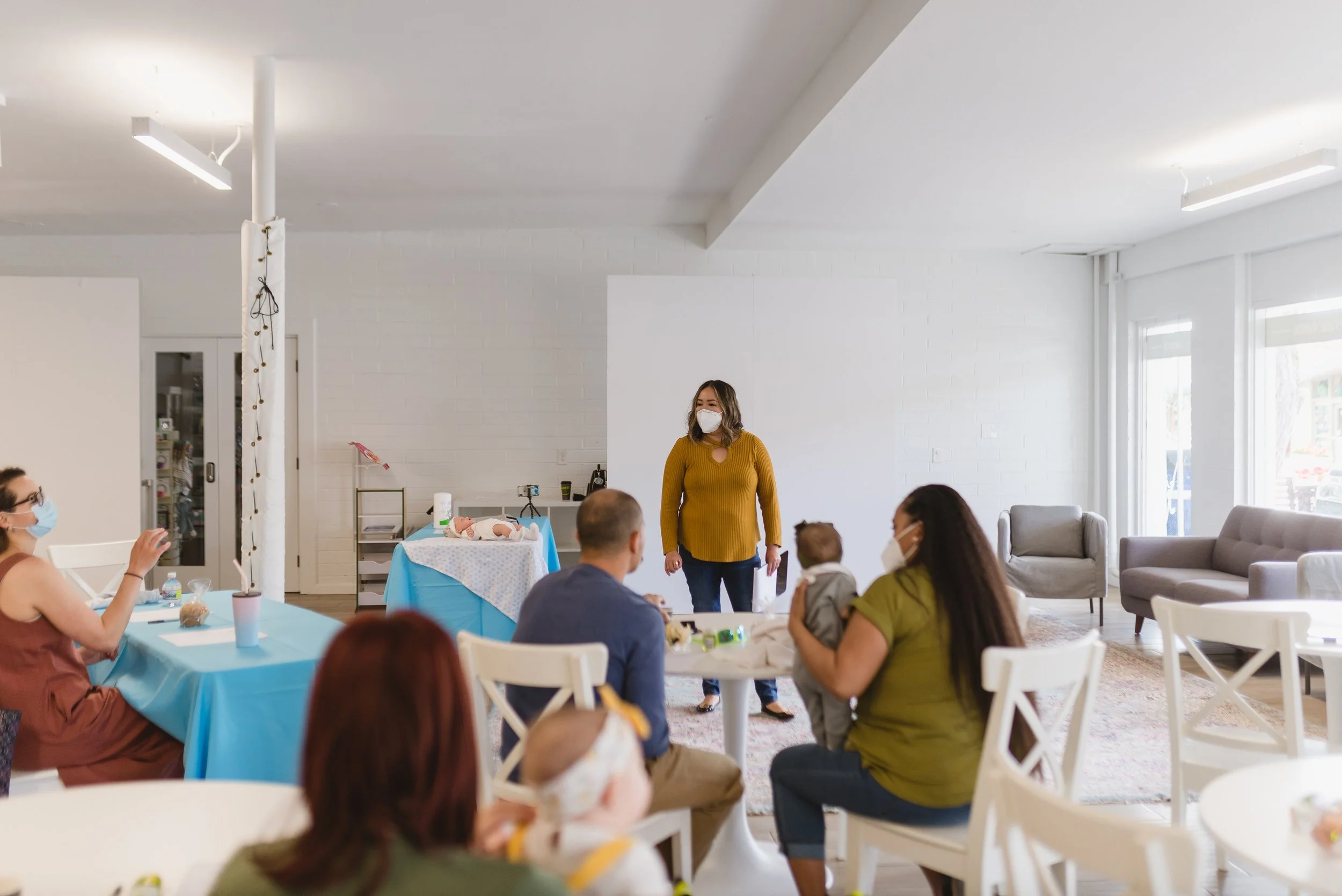
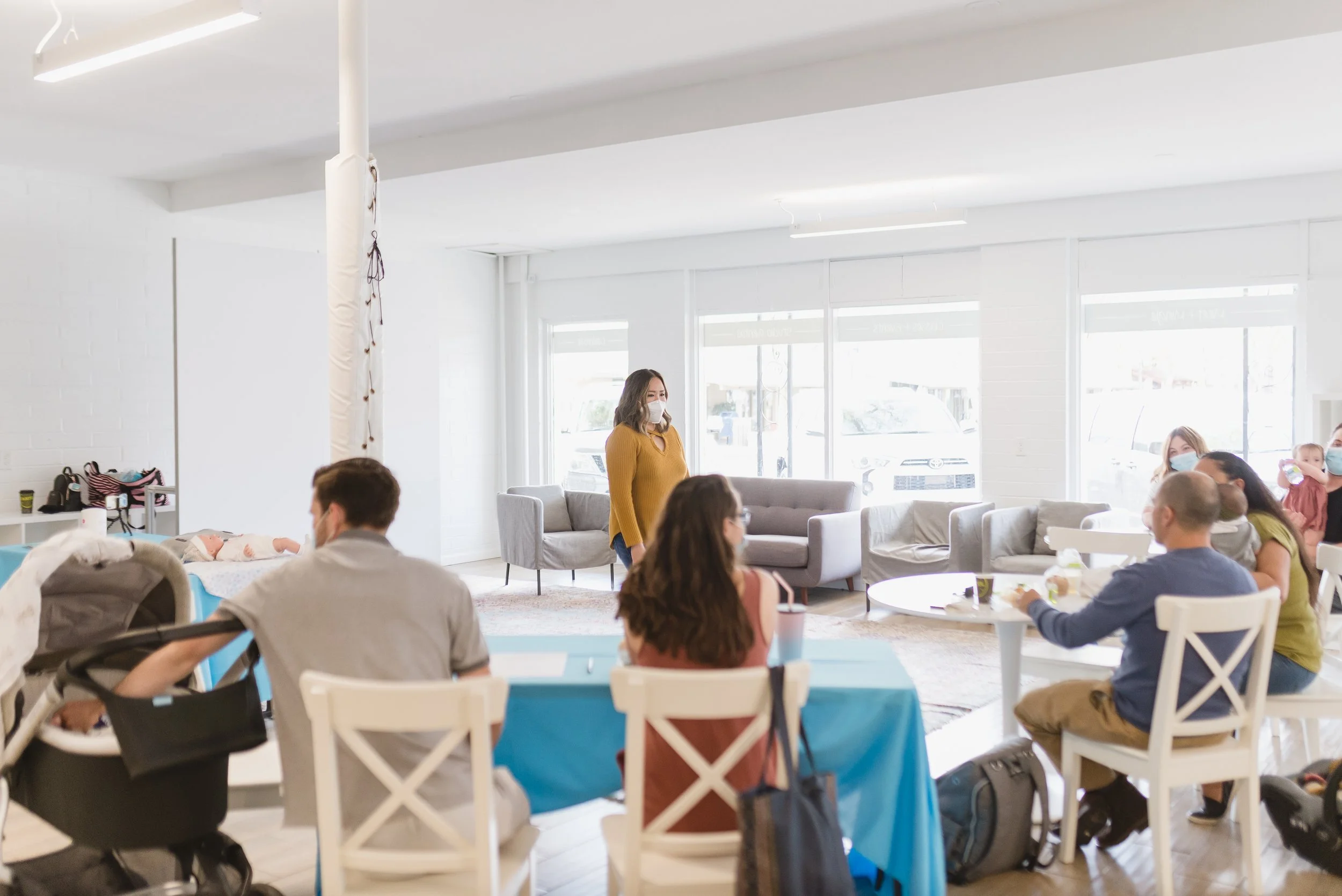
A group of people, some wearing masks, attending a baby shower in a bright, modern room with white walls and large windows. A woman in a mustard yellow sweater stands near a table with a doll for a baby doll diaper changing activity. There are tables with blue tablecloths, snacks, and drinks, and a decorative pole with string lights.
Women and children gathered in a bright, modern room with white walls and large windows, some wearing masks, some seated at tables, and a woman standing in the room.
A woman in a mustard yellow sweater and face mask standing in a bright room, speaking to a small group of people, some facing away from the camera and wearing masks, with a table displaying baby dolls and supplies.

Key Findings

Value
Participants immediately understood the value of the wearable concept and described it as portable, lightweight, and convenient.

Perception Shift
Participants consistently commented that the product felt more comfortable and secure than they initially expected.

User Feedback
Feedback focused on refining storage, pocket placement, one-handed accessibility, and washability rather than questioning the core concept.

5 of 7 participants would purchase
While the remaining participants cited timing (their children had outgrown the product) rather than concerns with the concept itself.

The focus group validated the core concept

with many participants commenting that the product was far more comfortable and easier to use than they had expected.
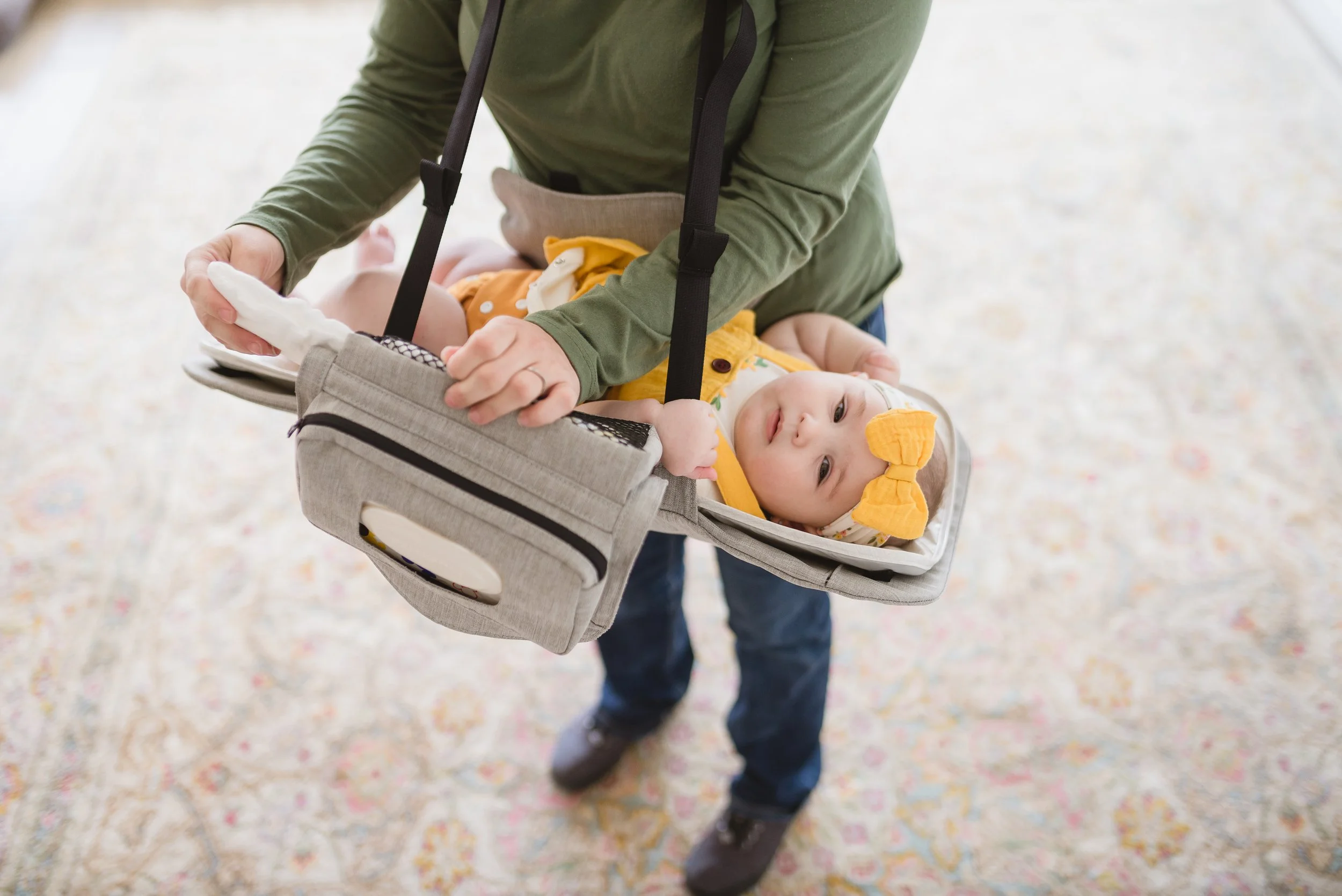
Person carrying a baby in a car seat at an indoor location with a colorful carpet.

Design Impact

After testing the product themselves, the focus group reinforced confidence in the core concept while highlighting opportunities to improve usability. Feedback directly informed subsequent design iterations, including storage layout, accessibility, and material selection before moving toward production.

One recurring theme was on comfort and usability as highlighted by the quote from a participant below.

Chikiroo is actually very comfortable once it’s on. My baby felt secure once strapped in. It looks like it would be kinda awkward right next to you. But it’s actually a lot easier to move everything down here than it looks like.
— Aspen and her 6 months, 18 lbs baby.
Child lying on a swing in a stroller, smiling and looking up at an adult who is pushing the stroller. The child is wearing a yellow hat with bear ears, a yellow shirt, and floral-patterned bottoms.

💡 Key Decision

When early prototypes fell short of the user experience I envisioned, I pivoted to a soft goods specialist. That decision became a turning point, resulting in a prototype that successfully validated the concept with parents.

Bringing Chikiroo to Life

Bringing Chikiroo from concept to production required close collaboration across design, engineering, manufacturing, safety, and legal. Despite COVID-19 supply chain challenges, continuous iteration resulted in a manufacturable product that met our standards for functionality, quality, and safety.
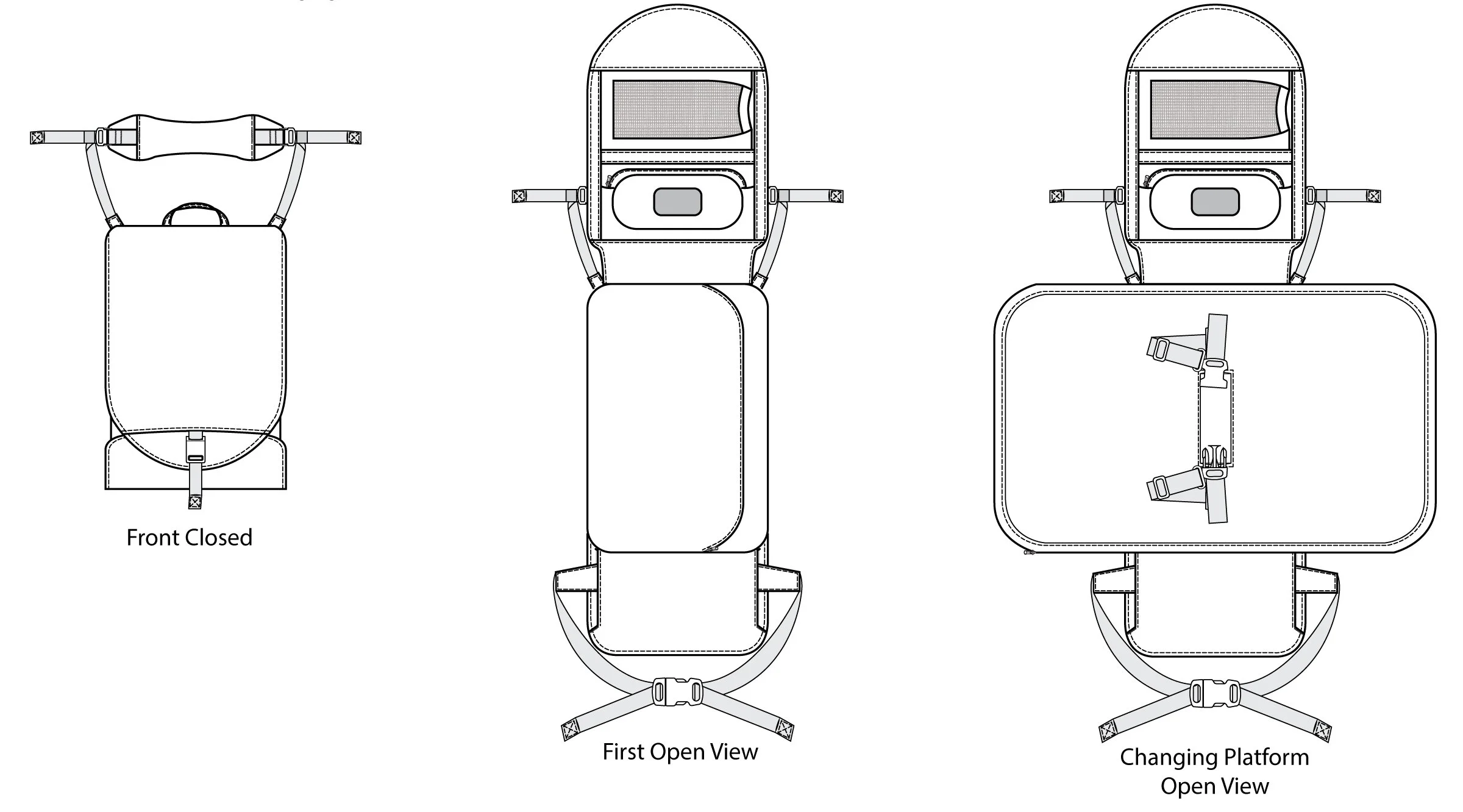
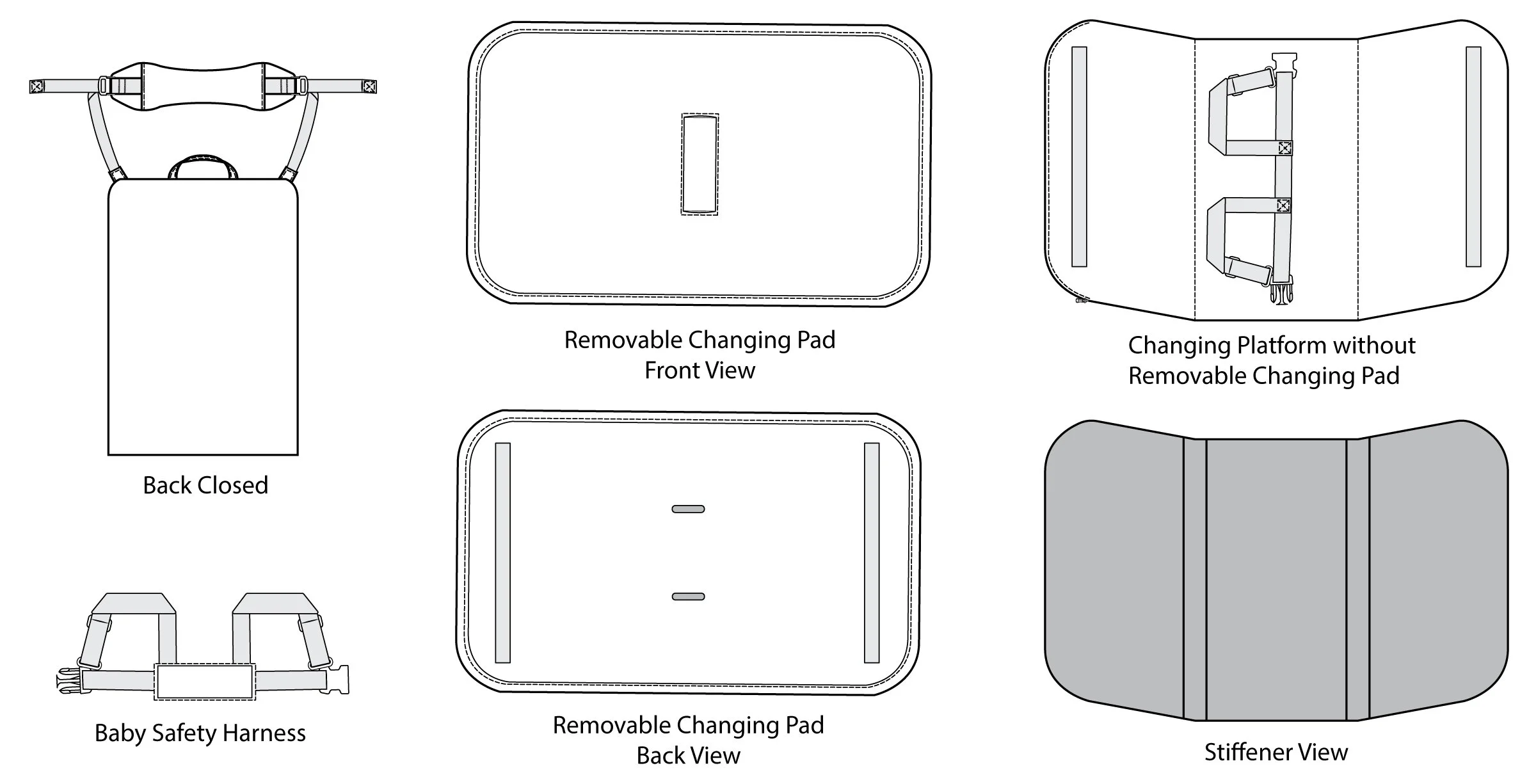
Technical diagram of a baby stroller with multiple views: front closed, first open view, and changing platform open view, illustrating different configurations and features.
Diagram of a portable baby changing station with different views: back with closed lid, removable changing pad front view, changing platform without removable pad, back view, and stiffener view; also shows baby safety harness.
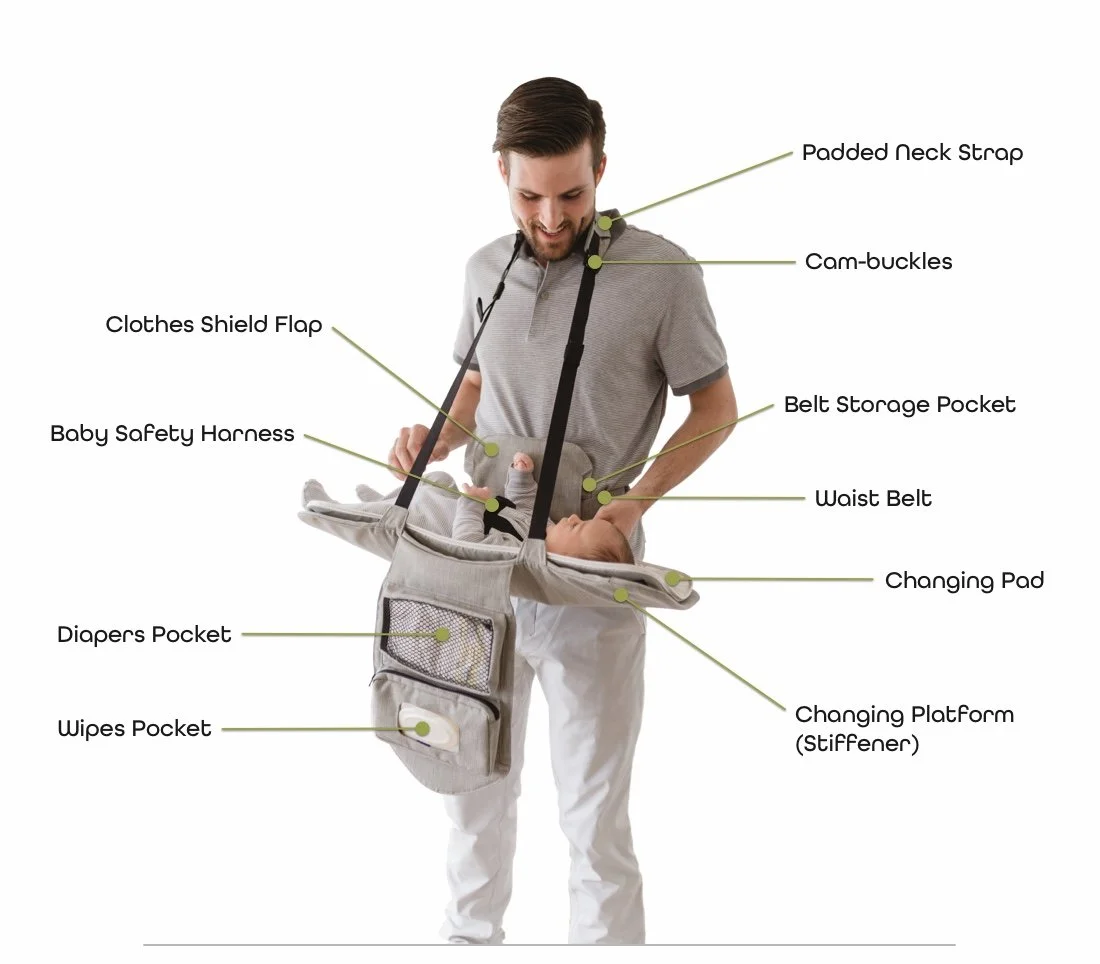
A man demonstrating a baby nursing cover with labeled features including padded neck strap, cam-buckles, clothes shield flap, baby safety harness, belt storage pocket, waist belt, changing pad, diaper pocket, wipes pocket, and changing platform.

Components Development

The product consisted of two core components: a wearable soft goods system and a custom-engineered rigid insert that provided a stable changing surface. Developing both components required extensive supplier sourcing, material exploration, and multiple rounds of iteration with manufacturing partners in the U.S. and overseas.

Material Exploration & Sourcing
Every component, from fabrics and buckles to foam and the custom stiffener insert, was carefully sourced, evaluated, and refined with industry experts before being finalized in the Bill of Materials (BOM).
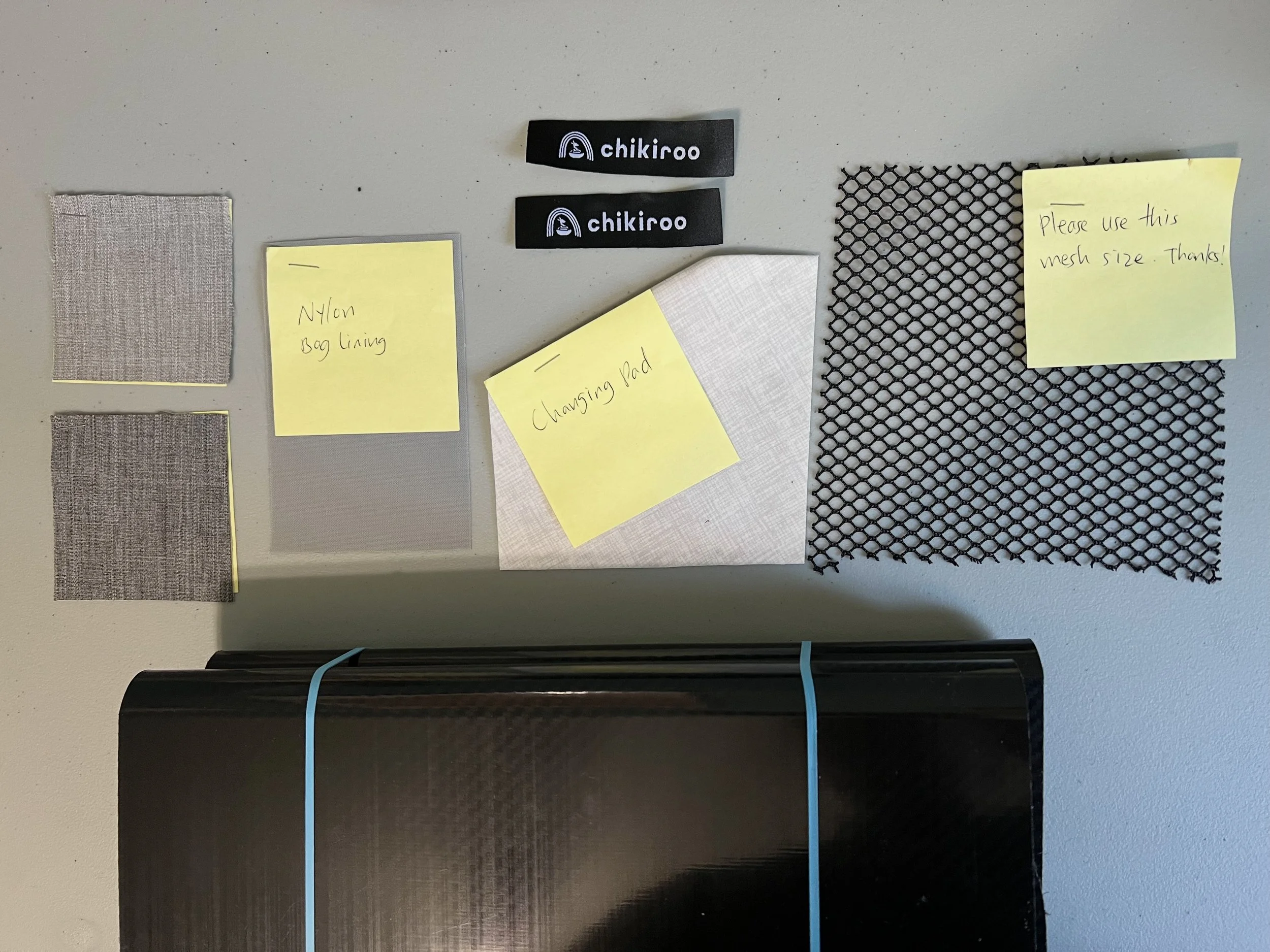
Notification notes and various fabric swatches for project discussion, paired with the brand logo 'chikiroo' and a black mesh mesh sample, displayed on a light-colored table.

The “Stiffener'“ Challenge

The stiffener insert was a critical component, providing a stable, supportive surface for babies during diaper changes. After extensive sourcing, testing, and design iteration, we selected a custom-engineered material from Germany commonly used in sporting goods. Although more expensive than other options, it was the only material that met our standards for strength, flexibility, durability, and safety.
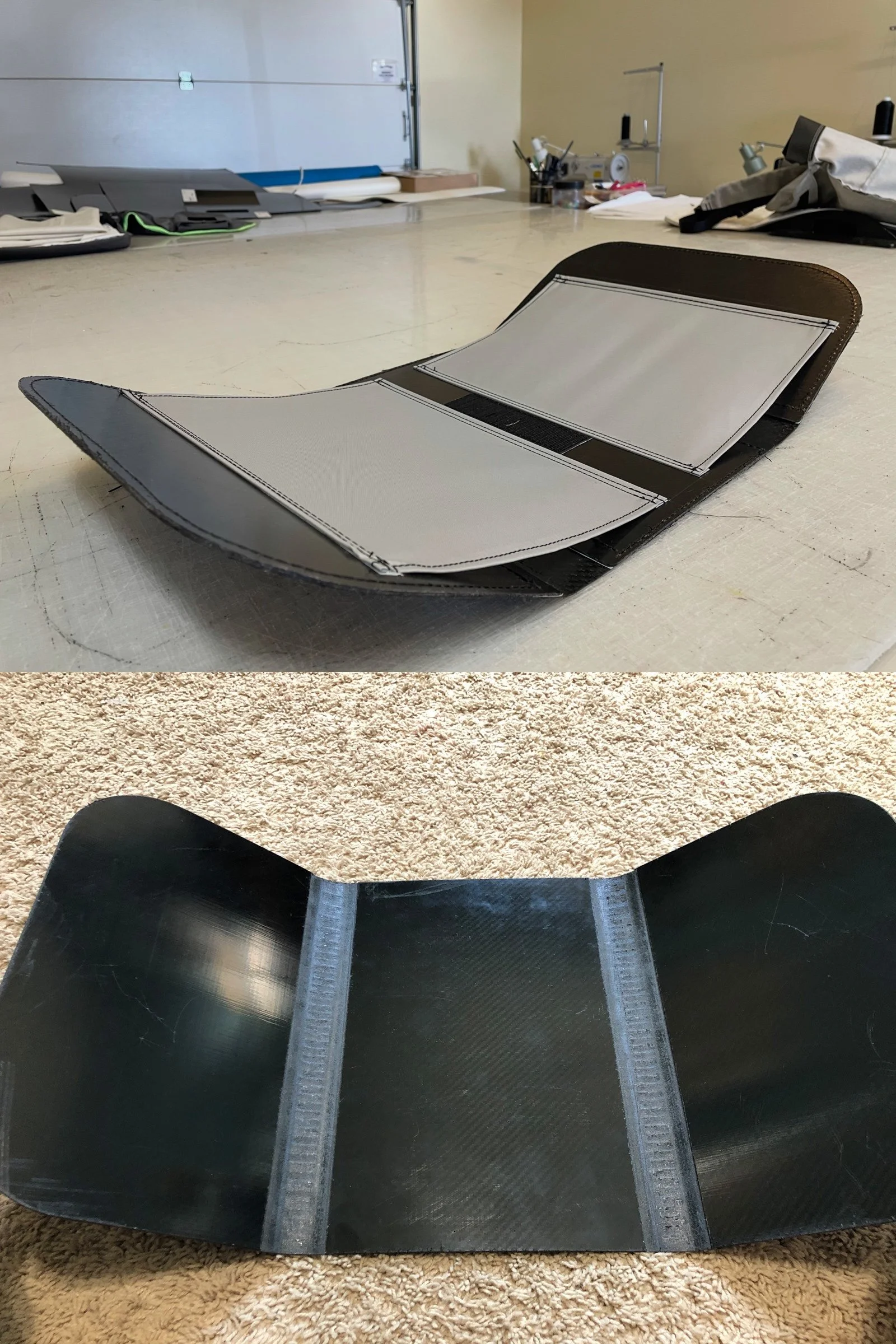
A black skateboard deck with grip tape, lying on a beige carpeted floor, with parts of the object taking on a curved shape.

Safety Testing

Safety remained a top priority throughout development. I collaborated with suppliers and juvenile product safety experts to refine the harness system, complete safety testing, and develop compliant warning labels and documentation. The final design successfully passed Intertek safety testing, validating that it met established safety standards.
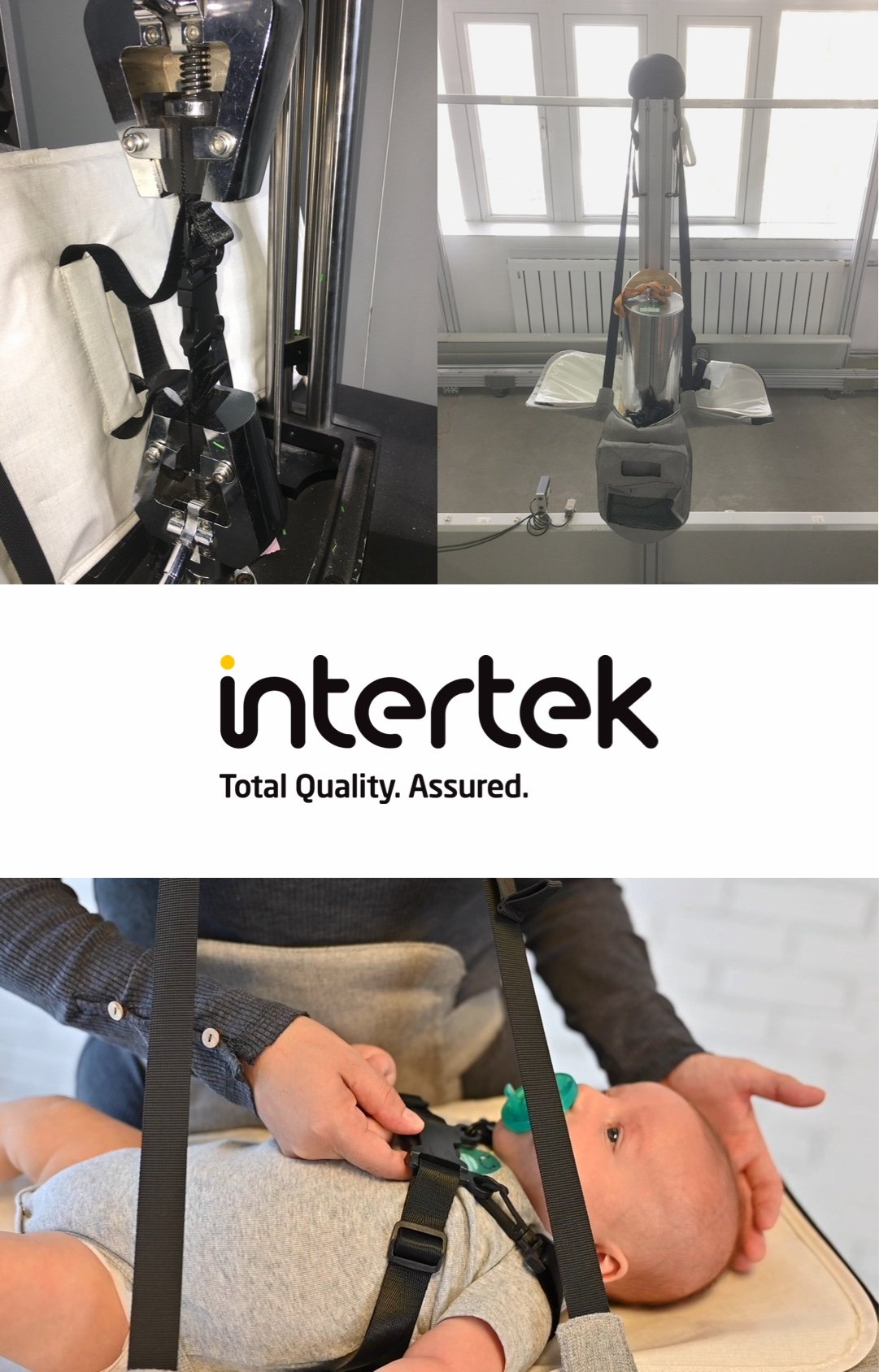
Close-up of a mechanical medical device, possibly a diagnostic or monitoring instrument, and an apparatus with a harness and a baby lying down, being examined or treated.

Utility Patent & Trademark

Protecting the innovation was a key part of bringing Chikiroo to market. Working closely with patent counsel, I secured U.S. Utility Patent No. 11,540,616 B2 in January 2023 for the world's first patented wearable baby changing station. We also registered the Chikiroo trademark in April 2024 to protect the brand identity.
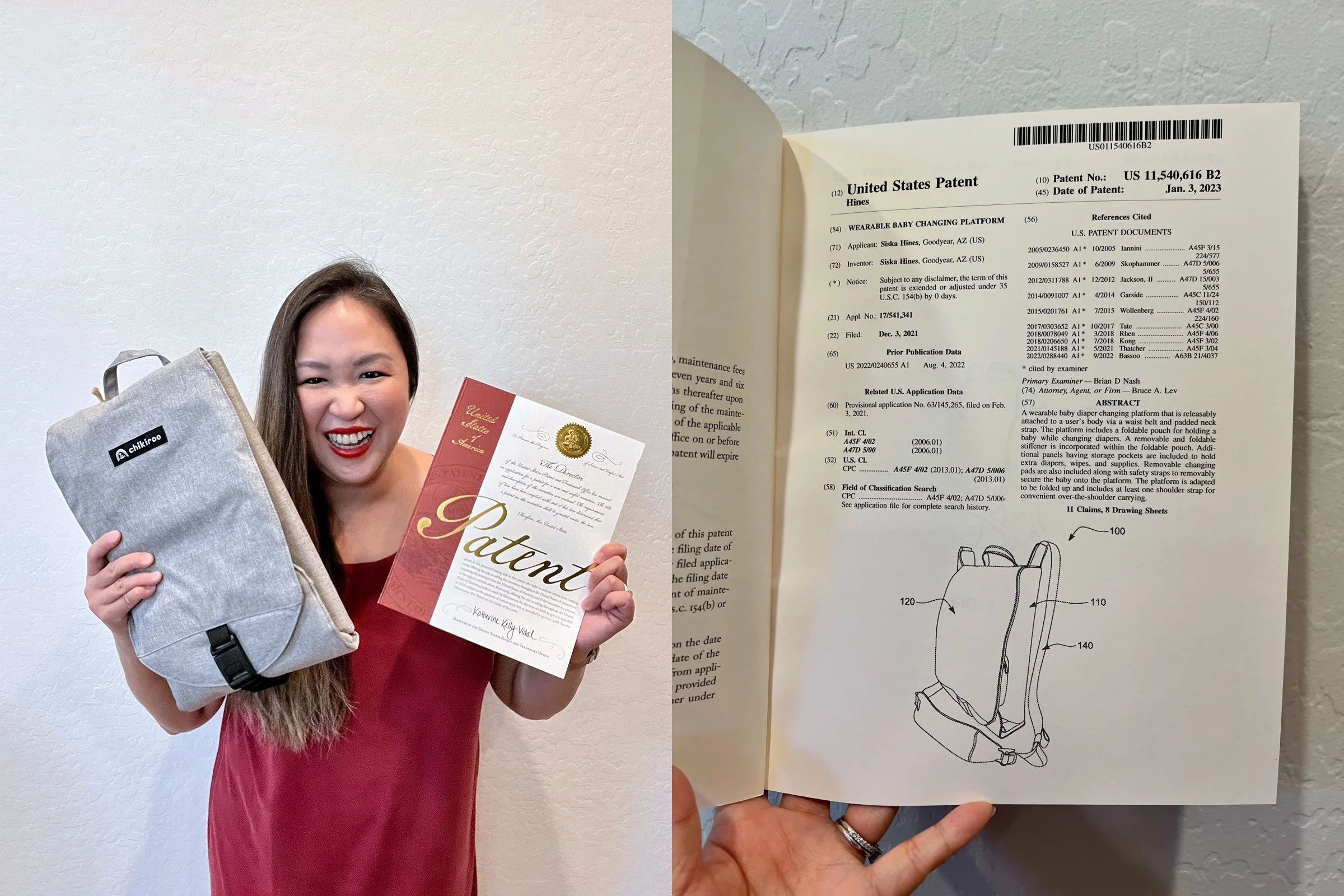
A woman smiling and holding a gray backpack, a red certificate, and a patent document, standing against a plain wall. The close-up inset shows a detailed diagram from the patent document.

Pre-launch Market Validation (2022)

Before launch, I surveyed 128 parents and caregivers across the U.S. to validate product-market fit, evaluate first impressions, and identify any remaining concerns.
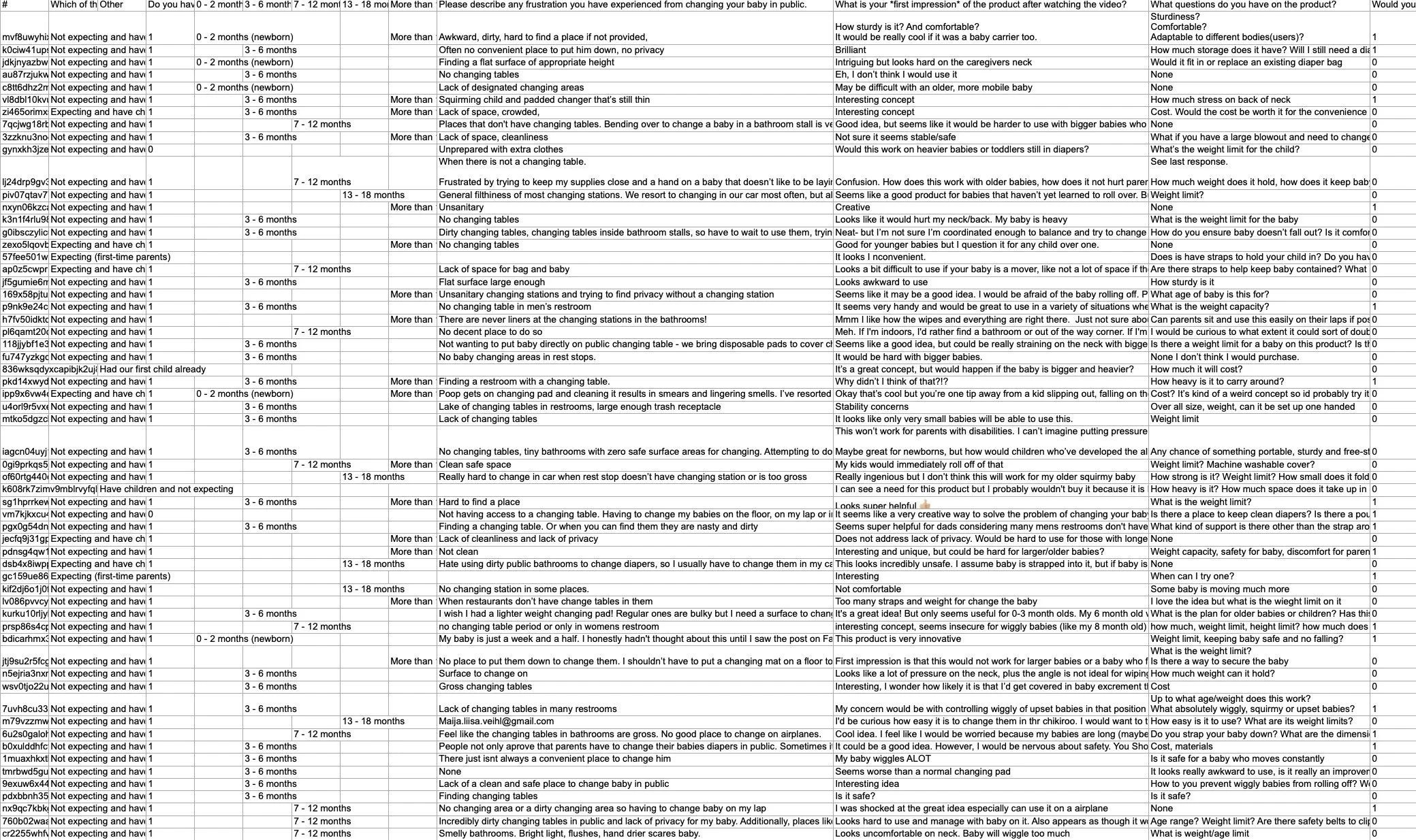
Spreadsheet with user reviews and feedback regarding baby changing tables, diaper stations, and public diaper changing facilities, including questions about safety, comfort, cleanliness, and convenience.

Key Findings

The problem still resonated
Parents continued to report frustrations with limited changing tables, unsanitary facilities, and the lack of safe places to change babies in public.

The value proposition was immediately understood
Participants described Chikiroo as innovative, convenient, and a practical solution to a common parenting challenge.

Everyday usability mattered
Questions centered on portability, storage, diaper bag compatibility, and how Chikiroo fit into existing parenting routines.

Safety drove purchase confidence
Parents wanted reassurance around stability, comfort, weight limits, and support.

The research confirmed strong market fit

with parents describing Chikiroo as innovative, convenient and practical solution.
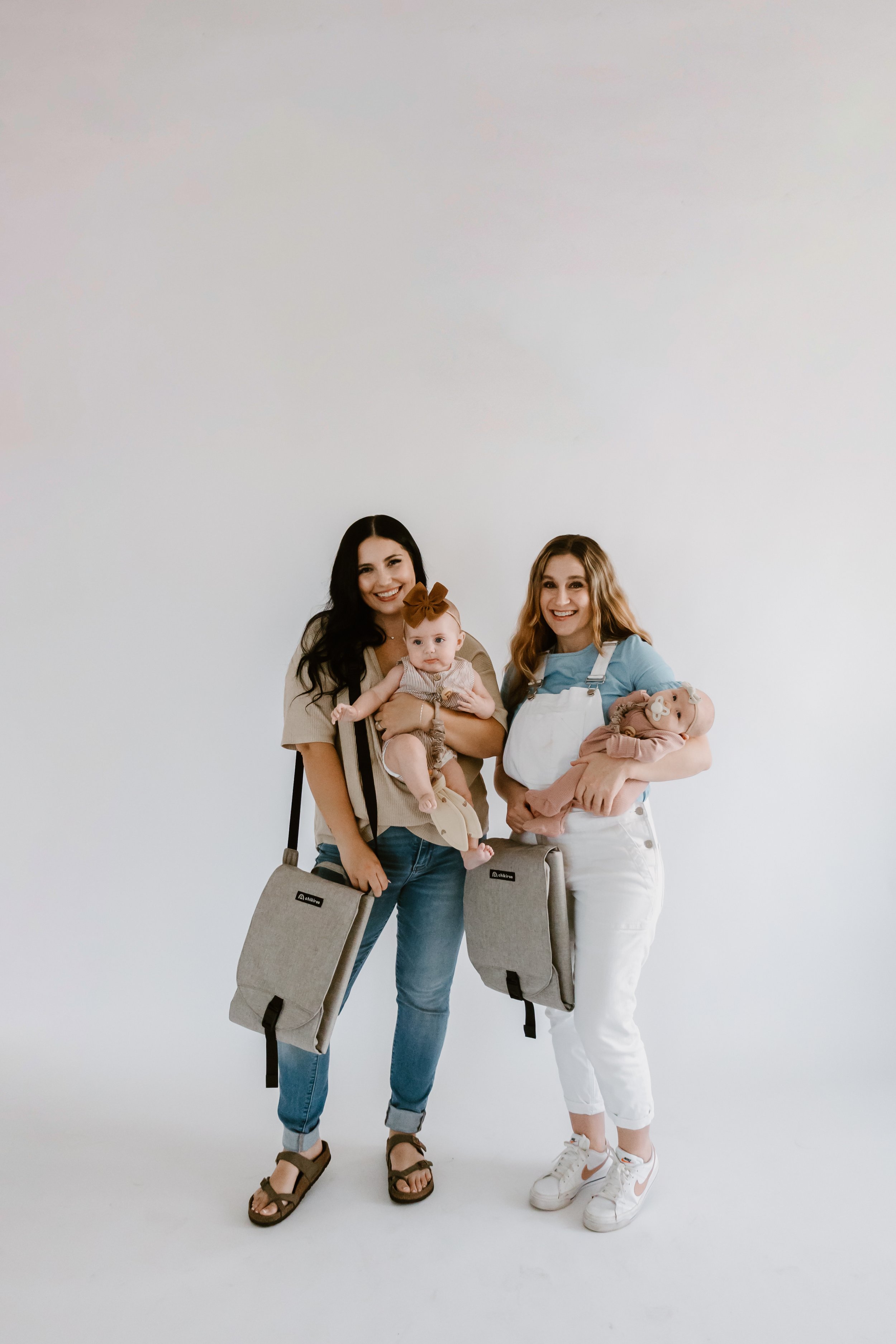
Two women holding babies, standing against a plain white background, smiling at the camera. Each woman has a portable movie or TV screen on a strap hanging from her shoulder.

Market Validation

The research confirmed strong product-market fit and shifted our focus from validating the problem to building confidence in the solution. It influenced our launch strategy by emphasizing safety messaging, real-world demonstrations, and clear communication around everyday use. Parents were no longer asking, "Why would I need this?"—they were asking, "Will this work for my family?"

Bringing Chikiroo to Market

Launching Chikiroo involved much more than manufacturing a product. It required creating a cohesive brand, designing a seamless purchasing experience, and developing a go-to-market strategy that would educate parents and build trust in an entirely new product category.

Brand Identity

Inspired by a mother kangaroo carrying her joey, I developed Chikiroo's visual identity to reflect safety, comfort, and nurturing across the company’s product line. The branding established a playful yet trustworthy foundation across every customer touchpoint.
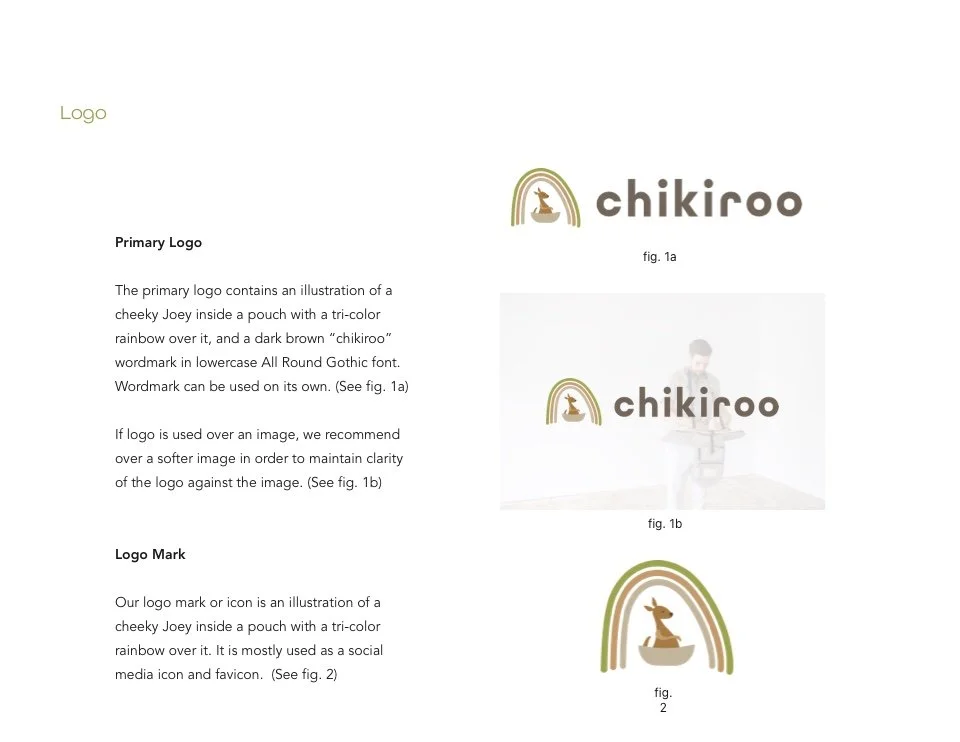
Page from brand guidelines showing logo design with a rainbow over a pouch with a cheery Joey inside, and a dark brown "chikiroo" wordmark in lowercase All Round Gothic font, including a logo mark of a Joey inside a pouch with a rainbow over it.
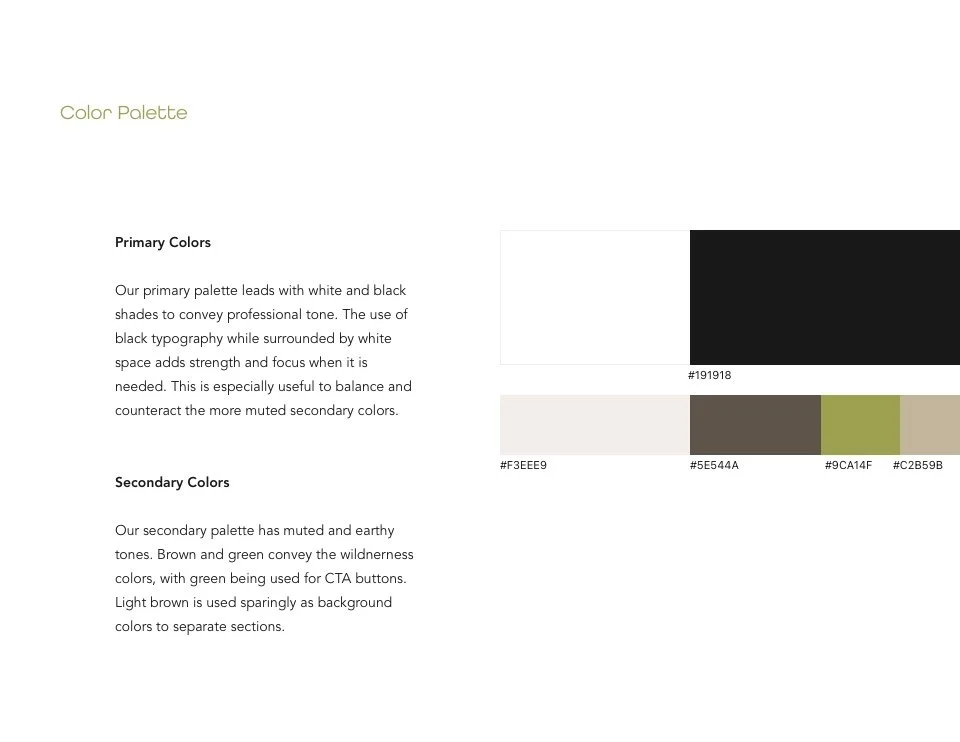
A page from a design guide showing a color palette with primary and secondary colors. The primary colors include white and black, with secondary colors in shades of brown, green, and light beige, along with their hex codes.
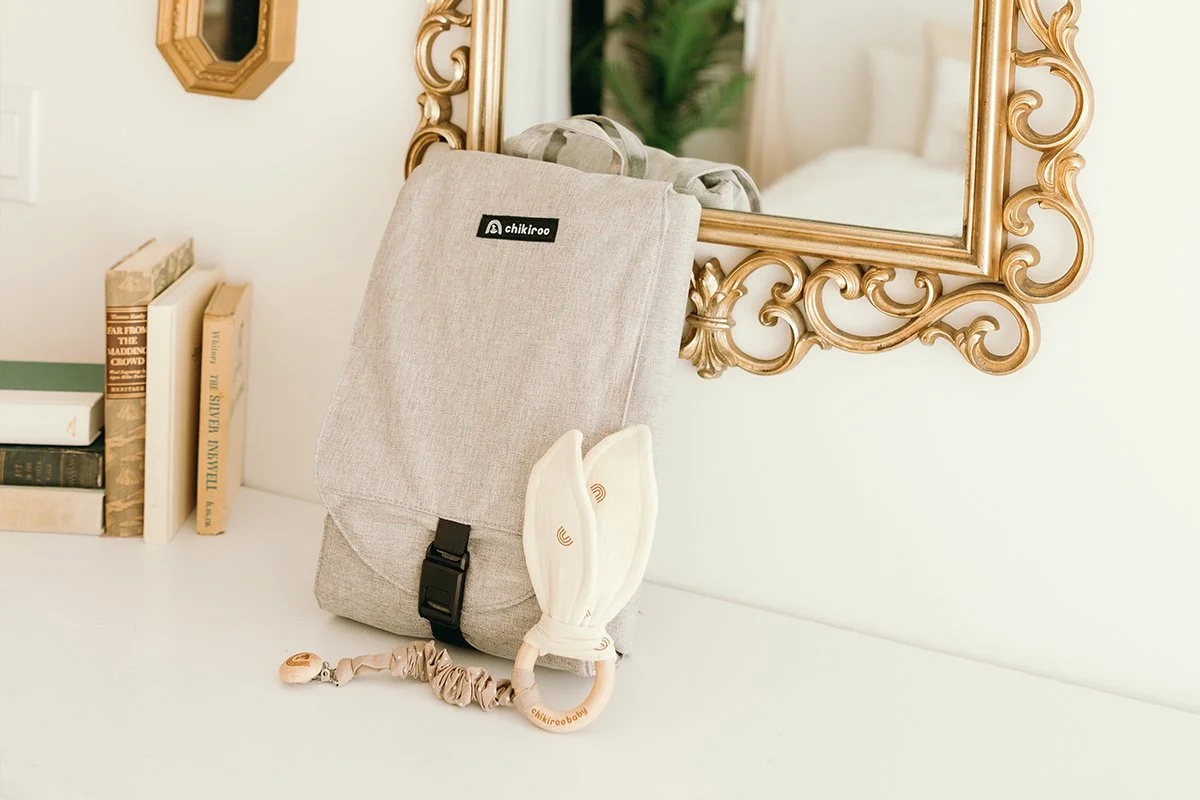
A beige fabric backpack hanging on a decorative gold-framed mirror, with a wooden bunny-shaped teething toy attached, on a white surface next to a stack of books and reflected in the mirror.
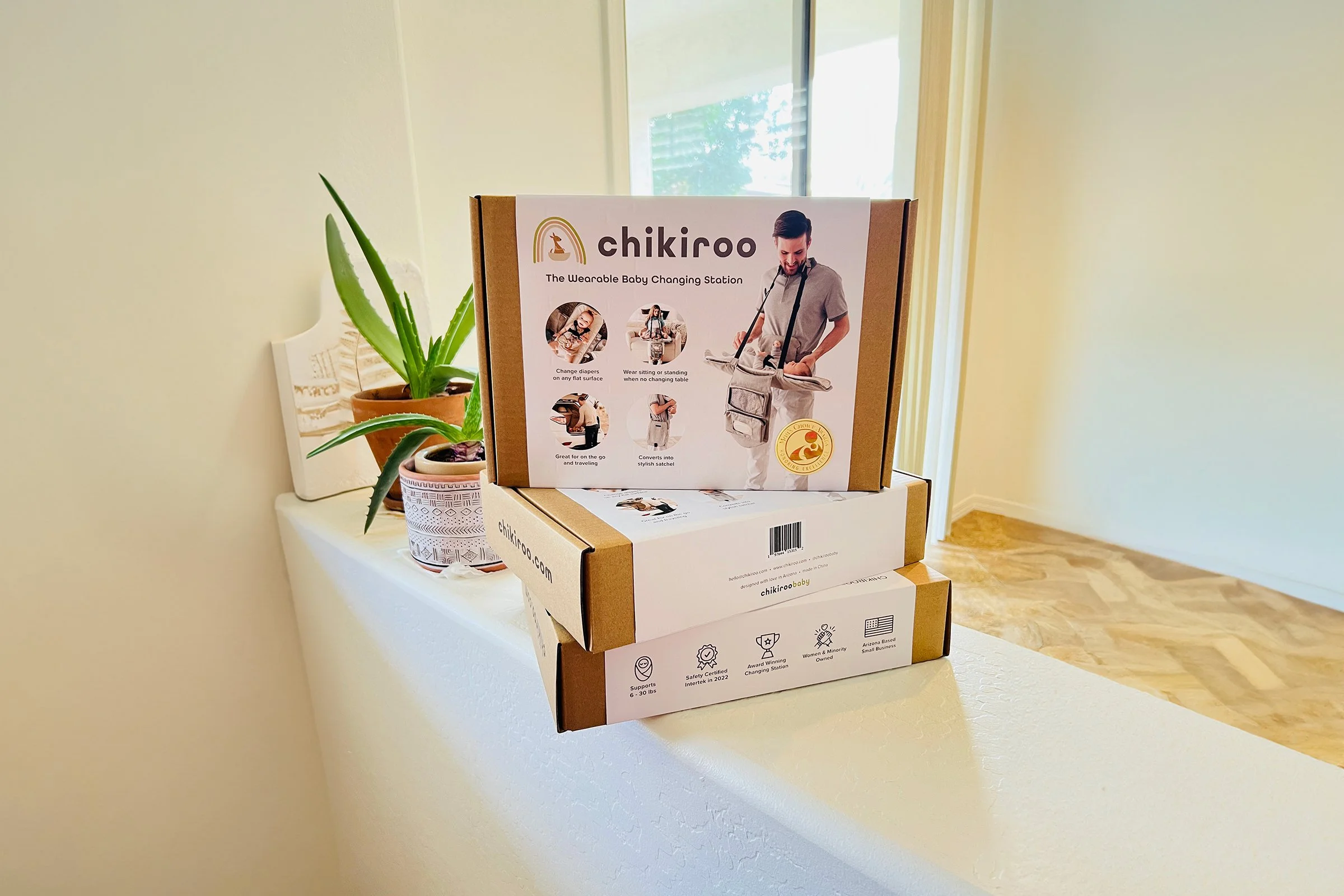
Boxes of Chikiroo wearable baby changing stations, with a man demonstrating the product, placed on a white surface beside potted plants, in a room with beige walls and carpeted floor.
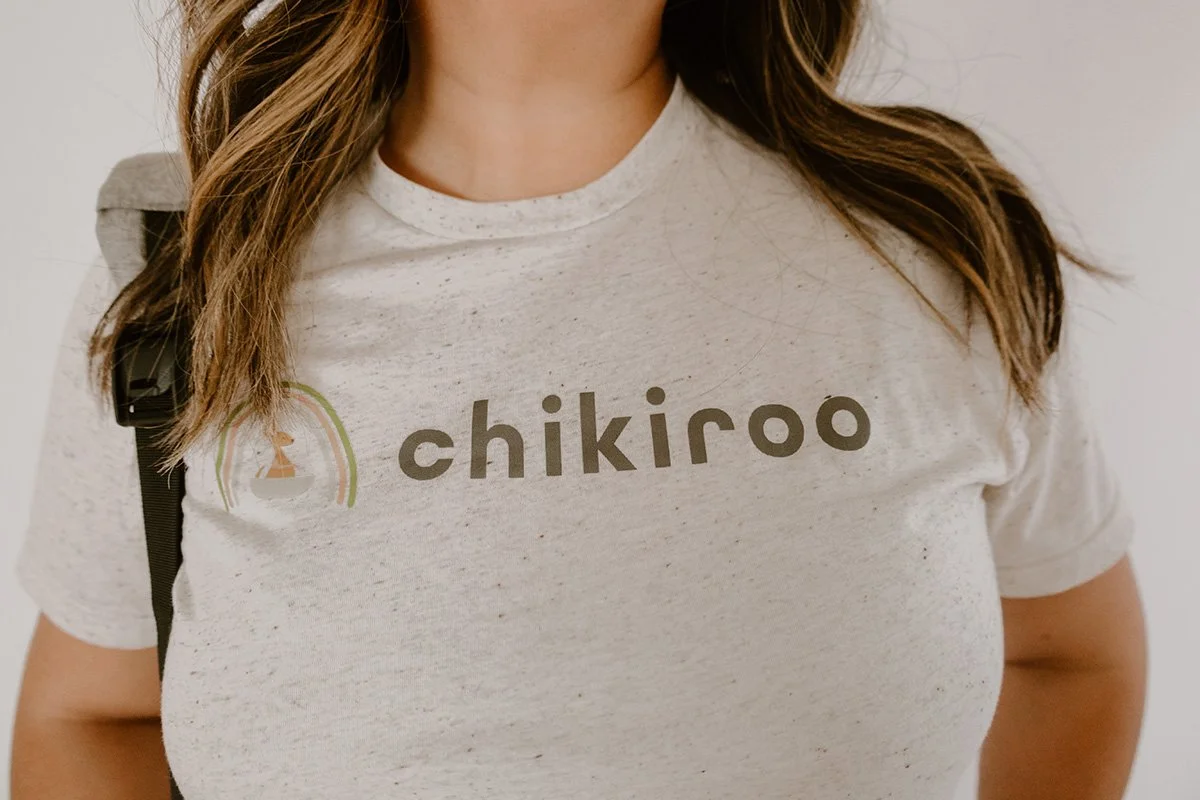
A woman wearing a light gray t-shirt with the word 'chikiroo' printed on it and a small rainbow logo, with a black strap of a backpack visible on her shoulder.

E-commerce Experience

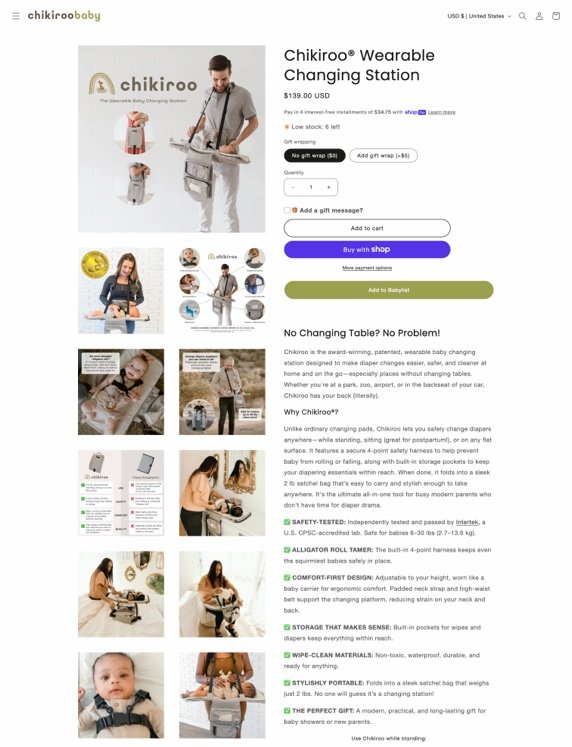
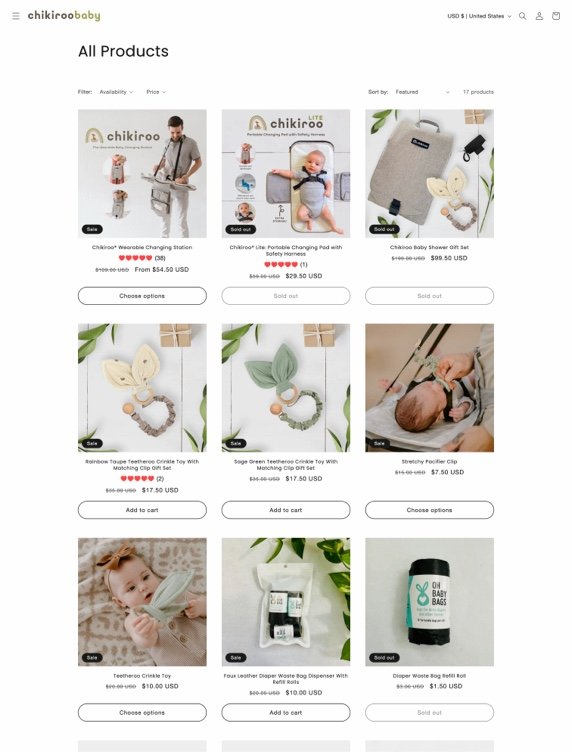
I designed and developed the Shopify e-commerce experience, translating the brand into a user-friendly storefront that educated parents and drove conversions.

Because Chikiroo introduced an entirely new product category, the experience focused on helping parents quickly understand the problem, the solution, and how the product fit into everyday life. Originally built to support pre-orders and launch, the site was designed to scale with future products, educational content, and a growing customer base.

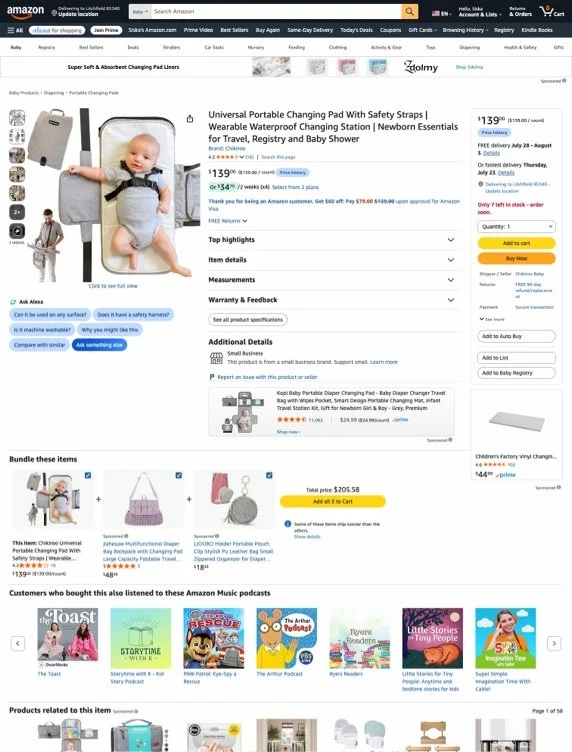
In March 2023, I expanded Chikiroo's online presence by designing and launching a branded Amazon Storefront.
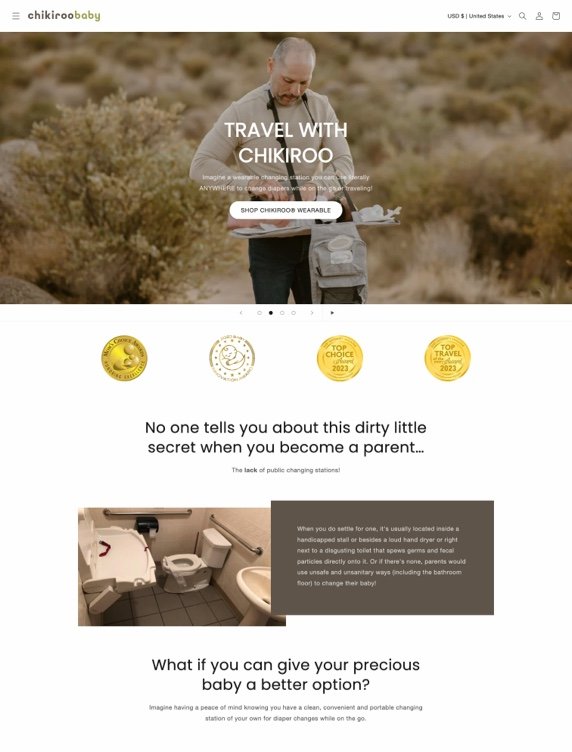
Website homepage for Chikiroo Baby, featuring a man outdoors with a backpack, promoting travel with a baby, and images of a baby changing station and a clean bathroom.
Online product catalog featuring baby and toddler products including a changing station, portable changing pad, baby shower gift set, teething clips, pacifier clip, baby blanket, teething toy, diaper waste bag, and diaper disposal roll
Product page for Chikiroo wearable changing station. Displays images of the portable diaper changing station, its features, and children using it. Includes price, options, and benefits of the product.
Screenshot of an Amazon product page for a universal portable changing pad with safety straps, wearable waterproof changing station, suitable for travel, registry, and baby showers. The product price is $139.00, with free delivery available. The page displays product images, highlights, details, related bundle items, and customer reviews, along with a purchase option and add-to-cart button.
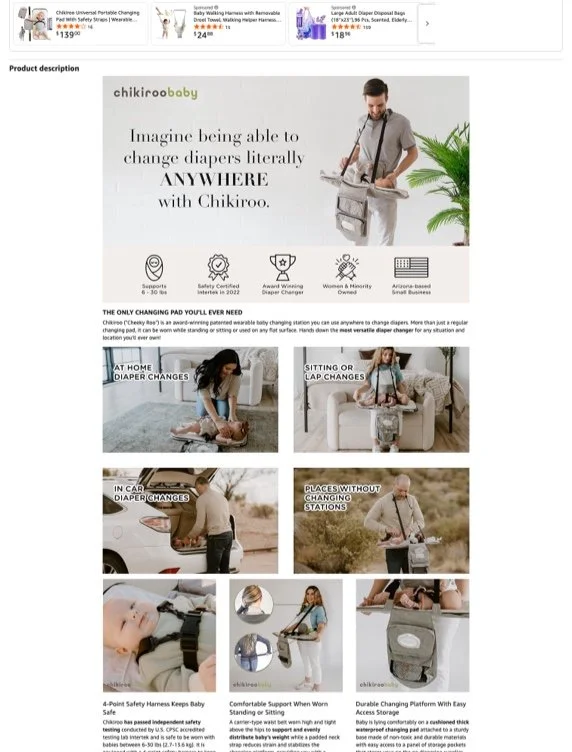
An advertisement for Chikiroo Baby changing products with images showing various use cases of the portable changing pad, including at home, sitting or lap changes, in-car changes, and outdoor changes, highlighting its safety, convenience, and versatility.

Go-To-Market Strategy

Rather than launching on Kickstarter as originally planned, I pivoted to a direct-to-consumer pre-order launch on Shopify, leveraging social media to build an online community and generate a buzz around an entirely new product category.

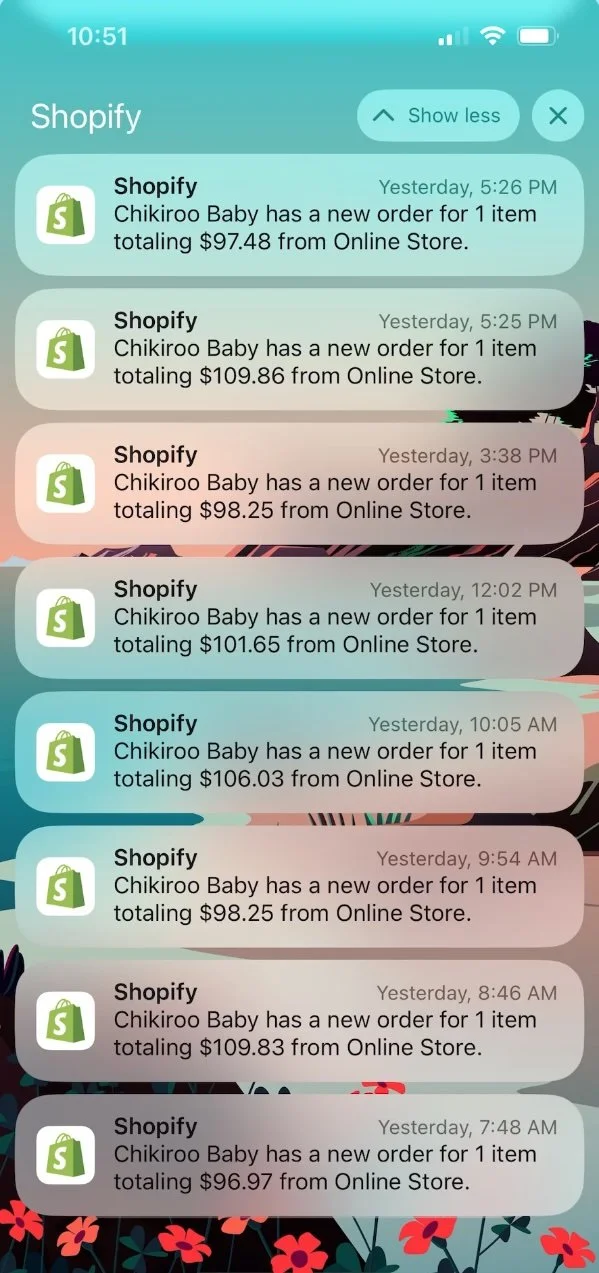
The breakthrough came in August 2022 when I shifted to short-form videos featuring real parents using Chikiroo. During the holiday season, several videos went viral across TikTok, Instagram, and Facebook, generating over 7 million organic views and introducing Chikiroo to millions of parents worldwide.

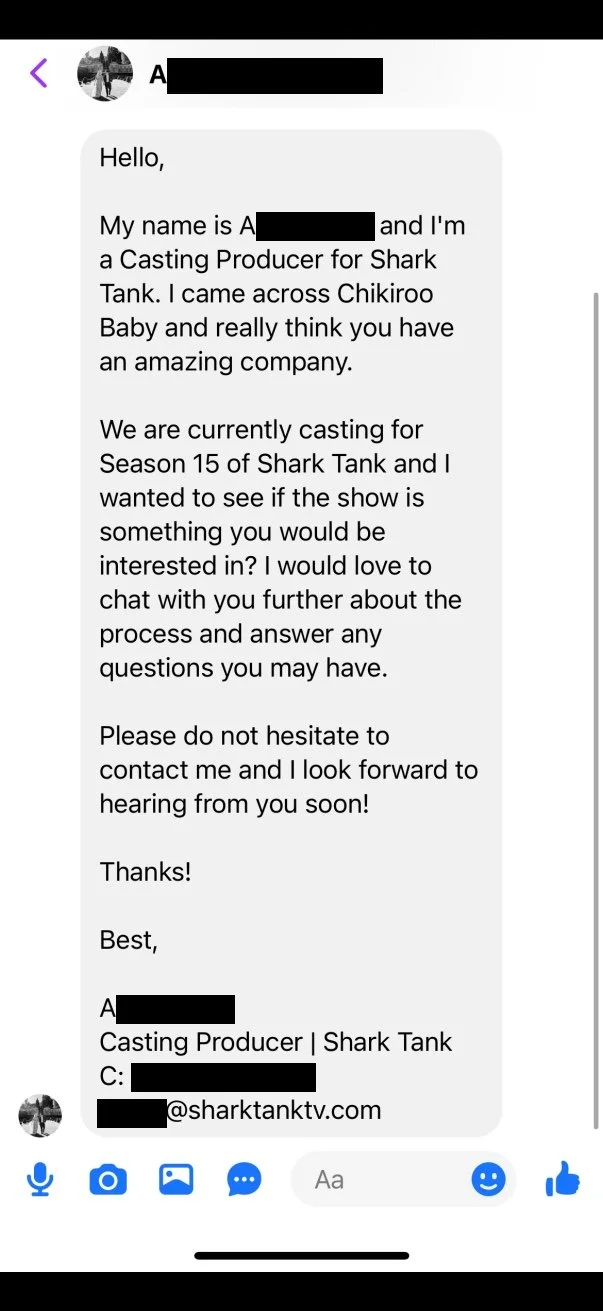
The launch reinforced that organic storytelling was the key to driving awareness and adoption of a brand-new product category. The momentum even attracted the attention of TV producers!
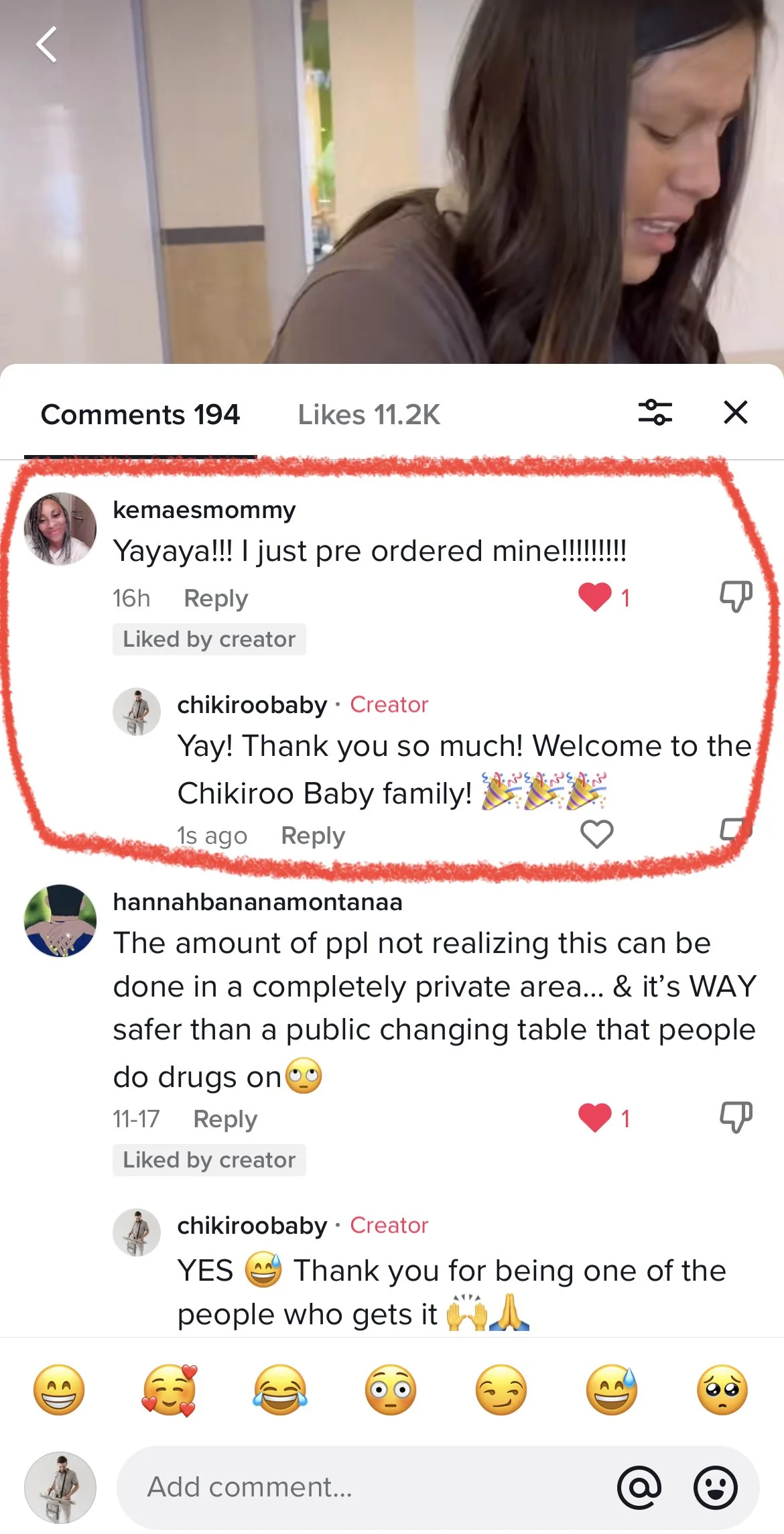
Screenshot of a video with a woman and positive comments celebrating her getting a pre-ordered item, welcoming her to a community, and discussing the importance of private area settings.
Screenshots of multiple Shopify order notifications for Chikiroo Baby, showing various order times and amounts ranging from about $96.97 to $109.86.
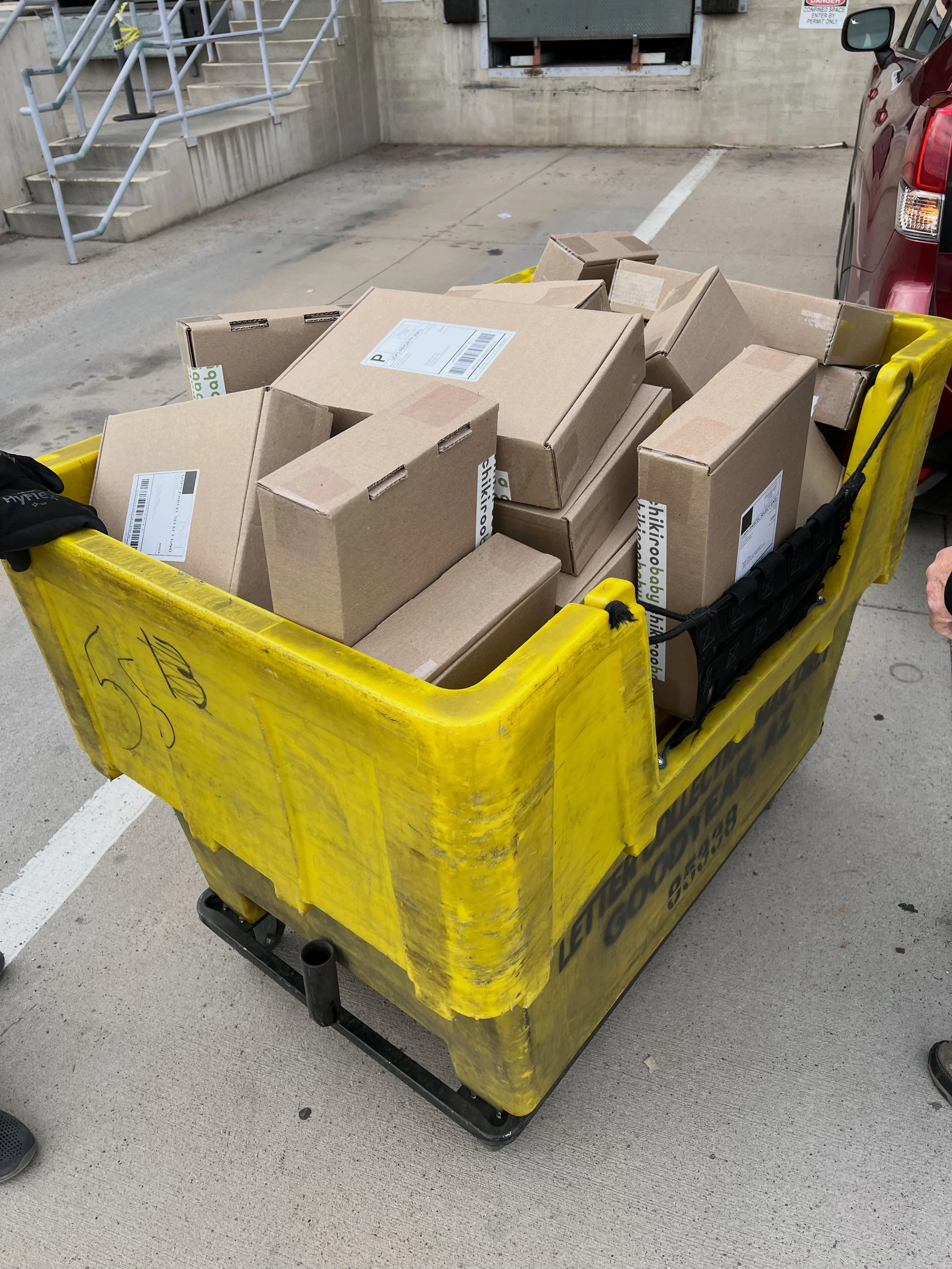
Yellow trash cart filled with cardboard boxes in a parking lot.
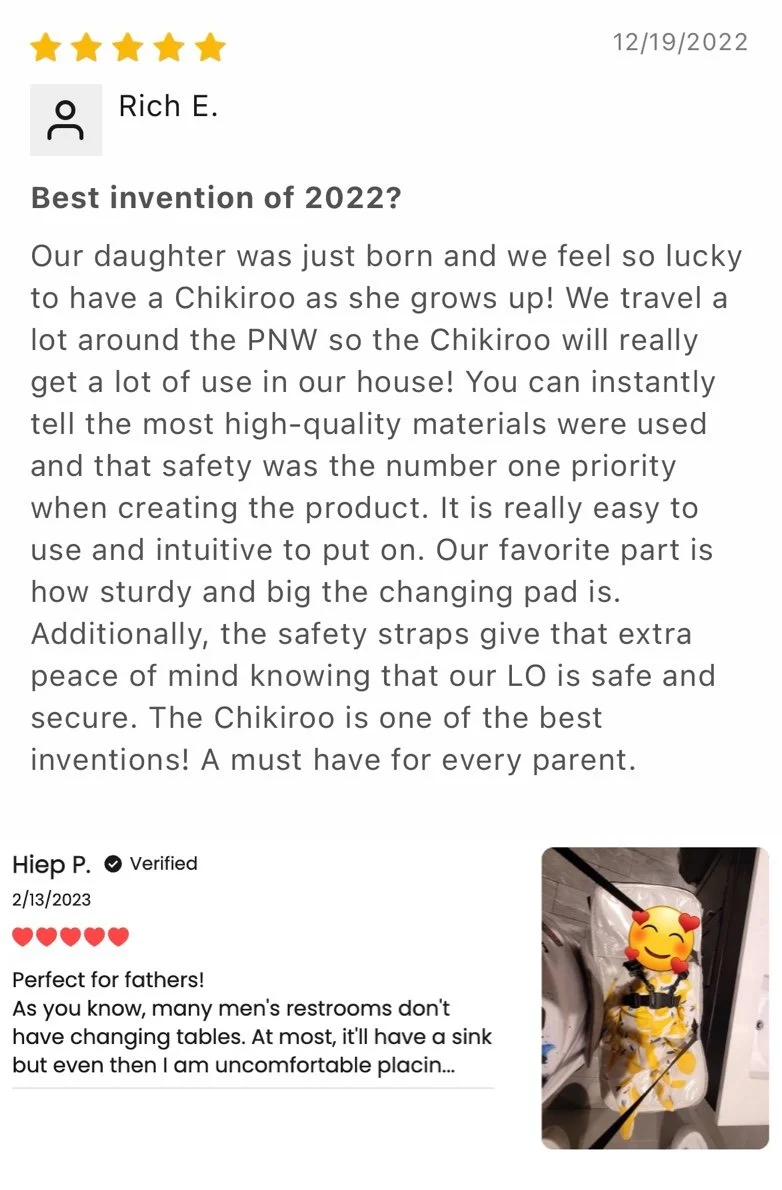
A review about a product called Chikiroo, including a photo of a diaper bag with a smiling emoji over it, and a user's comment about its usefulness for fathers in public restrooms.
Screenshot of a message from a casting producer for Shark Tank, introducing themselves and expressing interest in casting for Season 15, mentioning Chikiroo Baby, and providing contact information.

Chikiroo Impact & Reflections

Following its 2022 launch, Chikiroo grew into a recognized baby brand, introducing a new category of wearable baby changing solutions through organic growth, customer adoption, and industry recognition.
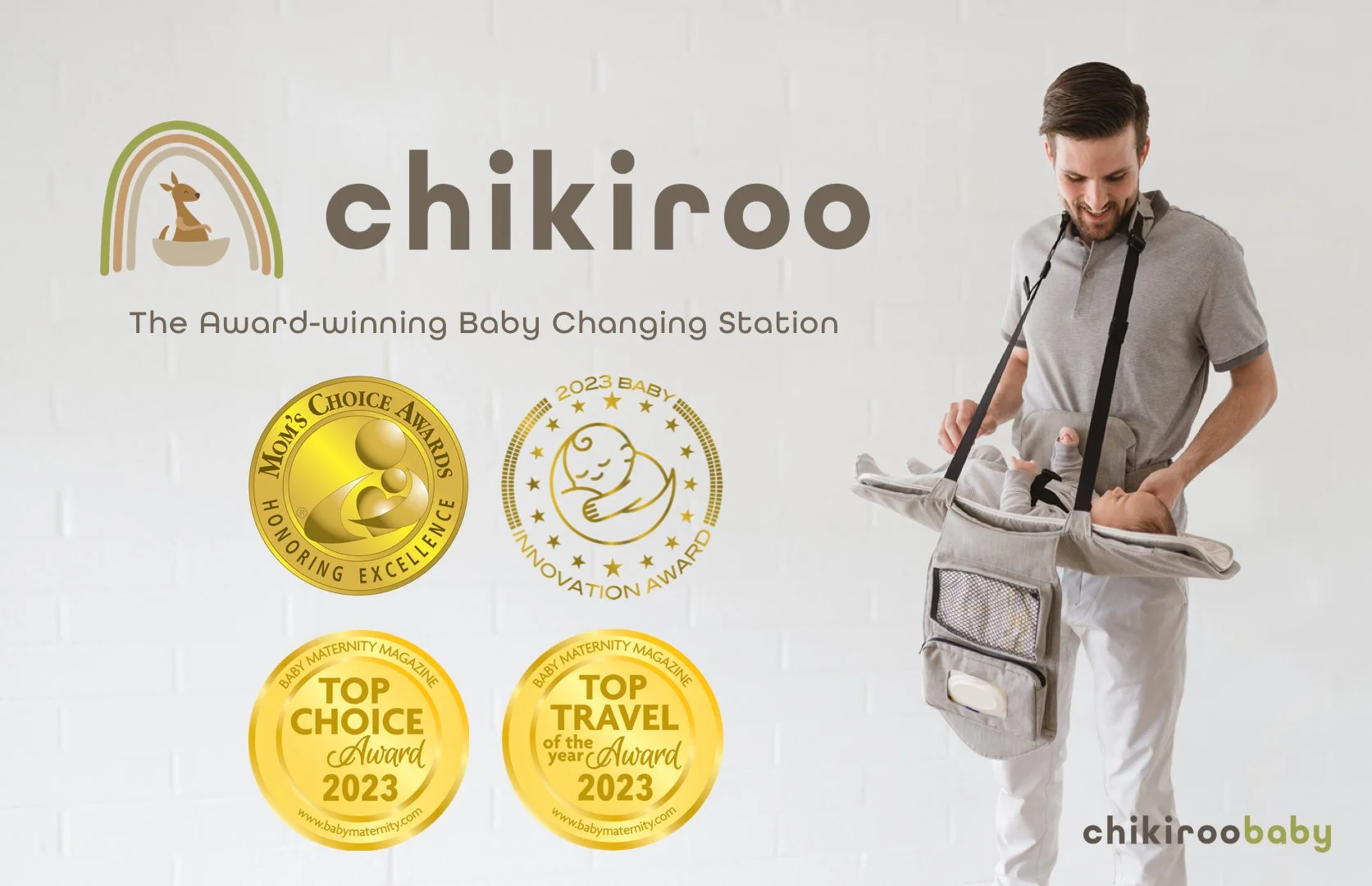
A man with a beard smiling and looking down at a baby in a baby carrying bag attached to his chest. The baby is lying in the bag, and the man is holding the bag with both hands. The background features a white wall with various award medals and a logo that reads "chikiroo" and "The Award-winning Baby Changing Station."

Highlights

  • 🏆 Received multiple industry awards, including the Mom's Choice Awards® Gold Award.

  • 📱 Grew the brand to 30M+ organic video views and 35K+ social followers across TikTok, Instagram, and Facebook.

  • 🌎 Helped thousands of families worldwide, shipping Chikiroo across the United States, Canada, Australia, and the United Kingdom.

  • 🤝 Built a network of affiliates, influencers, and brand advocates through organic social media.

  • 📺 Attracted interest from national media and television producers, including Shark Tank.

  • 💬 Sparked widespread conversation online, highlighting both enthusiasm and skepticism around an entirely new product category.

Reflections

Building Chikiroo from the ground up taught me that successful products require far more than thoughtful design. They demand an understanding of the entire product lifecycle—from user research and manufacturing to branding, go-to-market strategy, growth, and adaptation.

Although customer demand remained strong, rising import tariffs in 2024–2025 significantly increased manufacturing costs, making the business financially unsustainable. We made the difficult decision to wind down Chikiroo in 2026.

While the business came to an end, the experience became one of the most valuable chapters of my career. It shaped how I approach product design today: balancing user needs with business strategy, technical constraints, and the realities of bringing products to market.
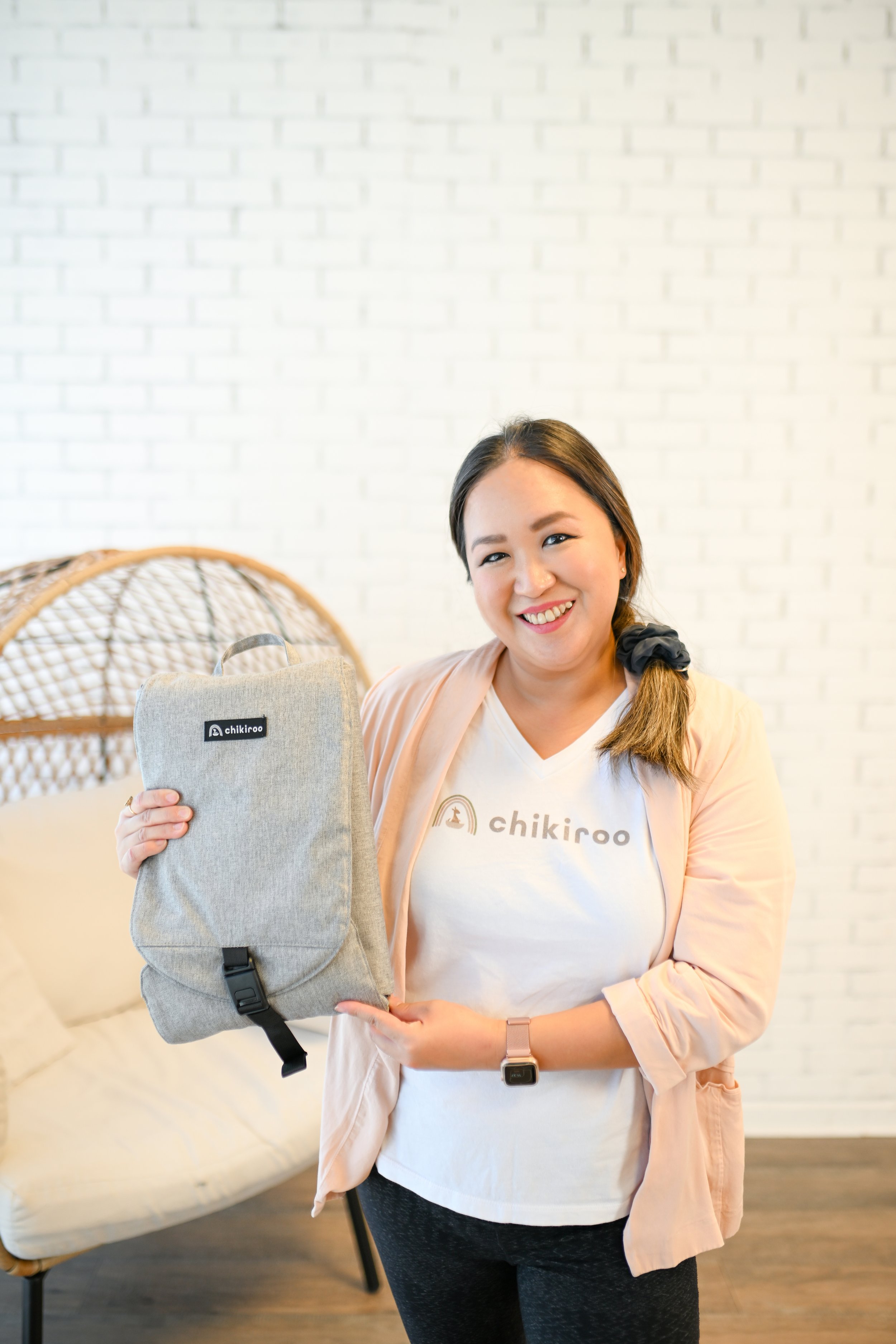
A woman with long hair tied in a side braid smiling and holding a gray backpack with a brand label, standing in front of a white brick wall indoors.